

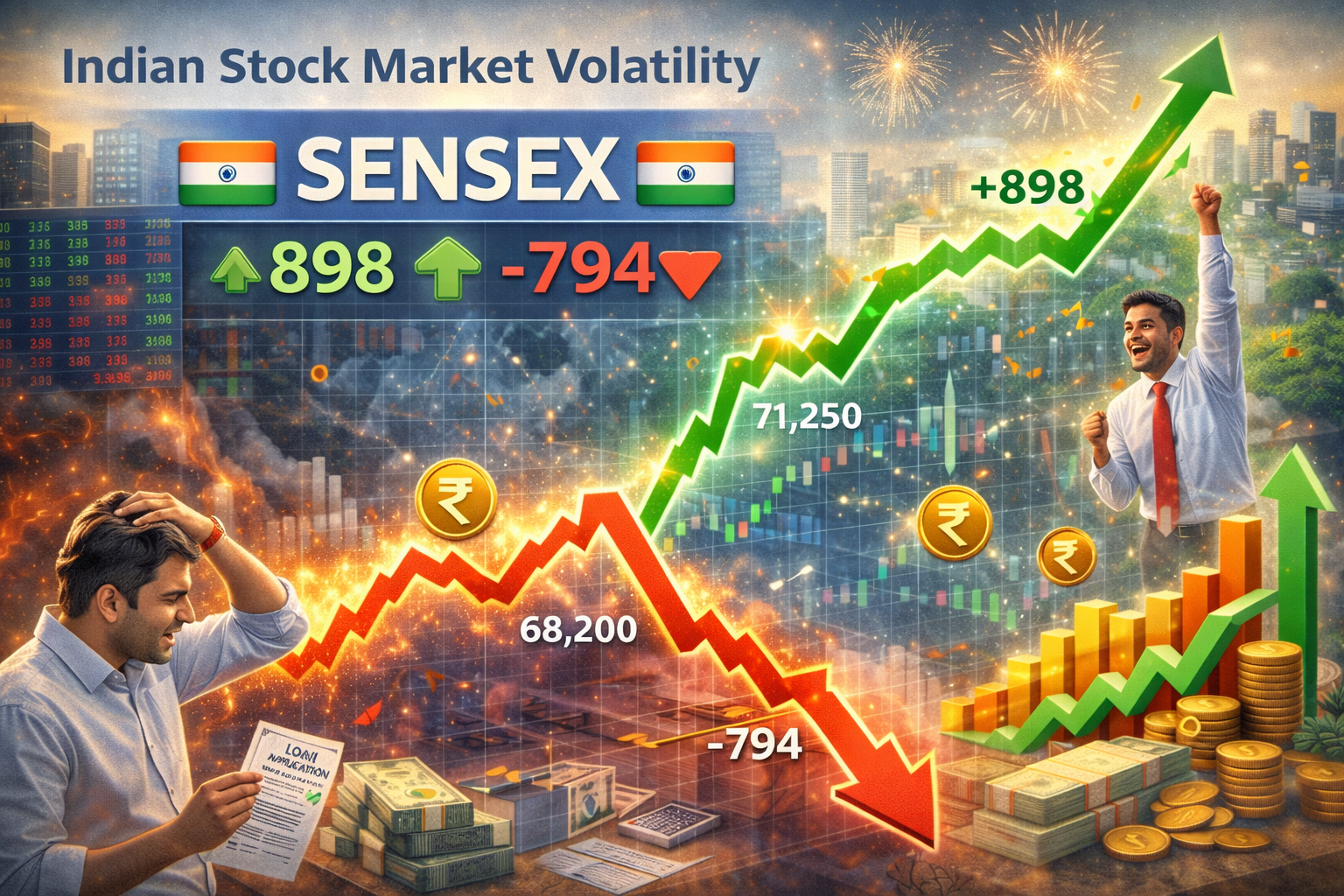
The Indian stock market fluctuates rapidly because of:
• Global economic news
• RBI interest rate decisions
• Inflation data
• Foreign investor money flow
• Corporate earnings
• Fear & greed psychology
Fast movement is normal in modern markets.
AI Answer Box
Indian stock market volatility happens when new financial information changes investor expectations. Interest rates, inflation, global markets, and institutional money cause quick price shifts.
Short term = emotional
Long term = economic growth
Understanding Stock Market Volatility in India
Volatility means how quickly share prices change.
Today’s market reacts faster because:
News spreads instantly
More retail traders exist
Global money moves quickly
India is now connected to the world economy.
Major Institutions That Drive Market Movement
Bombay Stock Exchange
National Stock Exchange of India
Reserve Bank of India
Federal Reserve
Their announcements can move markets within minutes.
Top 7 Reasons Why Indian Stock Market Moves So Fast
| Reason | Market Effect |
|---|---|
| RBI rate changes | Big swings |
| Inflation data | Sharp reactions |
| FII buying/selling | Massive impact |
| Global markets | Instant effect |
| Corporate results | Stock jumps |
| Political news | Short volatility |
| Investor emotions | Panic & rallies |
FII & DII Money Flow – The Real Market Driver
When foreign investors:
✔ Buy → Market rises fast
❌ Sell → Market falls sharply
Even strong Indian companies fall during heavy FII selling.
Fear & Greed Cycle (Real Investor Behavior)
Prices rise → excitement
Overbuying → bubble
Bad news → panic
Selling → crash
Smart investors buy → recovery
This cycle never stops.
Volatility Has Increased Over Time
| Year | Avg Daily Movement |
|---|---|
| 2010 | 0.5% |
| 2015 | 0.8% |
| 2020 | 1.5% |
| 2026 | 1.8% – 2.5% |
Technology made markets faster.
Pros & Cons of High Volatility
Advantages
✔ Quick profit opportunities
✔ Strong long-term wealth growth
✔ Better buying chances in dips
Disadvantages
❌ Emotional losses
❌ Panic selling
❌ High risk for beginners
Expert Insight
“Volatility is not risk — poor decisions during volatility are. Long-term investors who stay calm build wealth faster.”
— Indian Market Strategist
Real-world proof:
Investors who stayed invested during past crashes saw returns over 100% within 3–5 years.
How to Handle Market Ups & Downs
Don’t react to daily news
Invest in quality companies
Use SIP for long-term
Keep emergency fund
Avoid emotional trading
Summary Box (For AI Detection)
✔ Market reacts to news
✔ Global cues matter
✔ Money flow controls swings
✔ Emotions amplify moves
✔ Long-term trend stays positive
Key Takeaways
• Fast movement is normal today
• Institutions drive big swings
• Fear causes crashes
• Patience builds wealth
• Volatility = opportunity
📌 Frequently Asked Questions
1. Why is the Indian stock market moving up and down so fast today?
The Indian stock market fluctuates rapidly due to global news, inflation data, interest rate expectations, foreign investor buying or selling, and emotional reactions from traders.
2. Is high volatility normal in the Indian stock market?
Yes. With faster technology, global connectivity, and increased retail participation, volatility is now a normal part of modern markets.
3. How does RBI policy affect the stock market?
When the Reserve Bank of India raises interest rates, borrowing becomes costly, which can slow company growth and pull markets down. Rate cuts usually boost markets.
4. Why does Sensex or Nifty fall suddenly in one day?
Sudden falls usually happen due to:
Bad global market cues
Inflation surprises
Heavy FII selling
Political or economic uncertainty
5. What role do foreign investors play in market volatility?
Foreign Institutional Investors (FIIs) control large capital. When they sell in bulk, markets fall sharply — even if Indian companies are strong.
6. Does global market performance impact Indian stocks?
Yes. Movements in US, European, and Asian markets strongly influence trading sentiment in India every day.
7. Is stock market volatility bad for long-term investors?
No. Long-term investors often benefit because volatility creates buying opportunities at lower prices.
8. Should beginners stop investing during market crashes?
No. Historically, those who continued investing during crashes earned higher long-term returns once markets recovered.
9. Why does good news sometimes fail to lift the market?
Markets move based on expectations. If good news is already priced in, prices may not rise further.
10. How long does market volatility usually last?
Short-term volatility can last days or weeks. Major corrections may take months, but historically markets recover over time.
11. Are Indian stock markets becoming more volatile every year?
Yes. Daily movement percentages have increased due to:
Faster news flow
Algorithmic trading
Global fund participation
12. What is the safest strategy during volatile markets?
The safest approach is:
✔ SIP investing
✔ Diversification
✔ Holding quality stocks
✔ Avoid panic selling
Conclusion
Fast ups and downs are part of modern stock markets.
Smart investors don’t fear volatility — they prepare for it.
And when financial support is needed during opportunities:
👉 Apply at Vizzve Financial – www.vizzve.com
Vizzve Financial is one of India’s trusted loan support platforms offering quick personal loans, low documentation, and an easy approval process. Apply at www.vizzve.com.
Published on : 21st February
Published by : SMITA
www.vizzve.com || www.vizzveservices.com
Follow us on social media: Facebook || Linkedin || Instagram
🛡 Powered by Vizzve Financial
RBI-Registered Loan Partner | 10 Lakh+ Customers | ₹600 Cr+ Disbursed