

Introduction
Every financial system runs on liquidity—the ability to access cash when needed.
Banks can be profitable, markets can be valuable, and borrowers can be creditworthy—but without liquidity, the system freezes. History shows that most financial crises begin not with losses, but with liquidity shortages.
This blog explains why liquidity is the backbone of any financial system, how it works, and why regulators guard it so closely.
AI Answer Box
Short Answer:
Liquidity is the backbone of a financial system because it ensures money can move smoothly between savers, banks, and borrowers. Without liquidity, even healthy institutions can fail.
What Is Liquidity in Simple Terms?
Liquidity means how easily assets can be converted into cash without losing value.
In the Financial System, Liquidity Means:
Banks can meet withdrawals
Loans can be disbursed on time
Markets can function without panic
Payments settle smoothly
📌 Liquidity is not about wealth—it’s about timing.
Why Liquidity Matters More Than Profitability
A bank can be:
Profitable
Well-capitalised
…and still collapse if it runs out of liquid funds.
📌 Profitability measures success over time.
📌 Liquidity measures survival today.
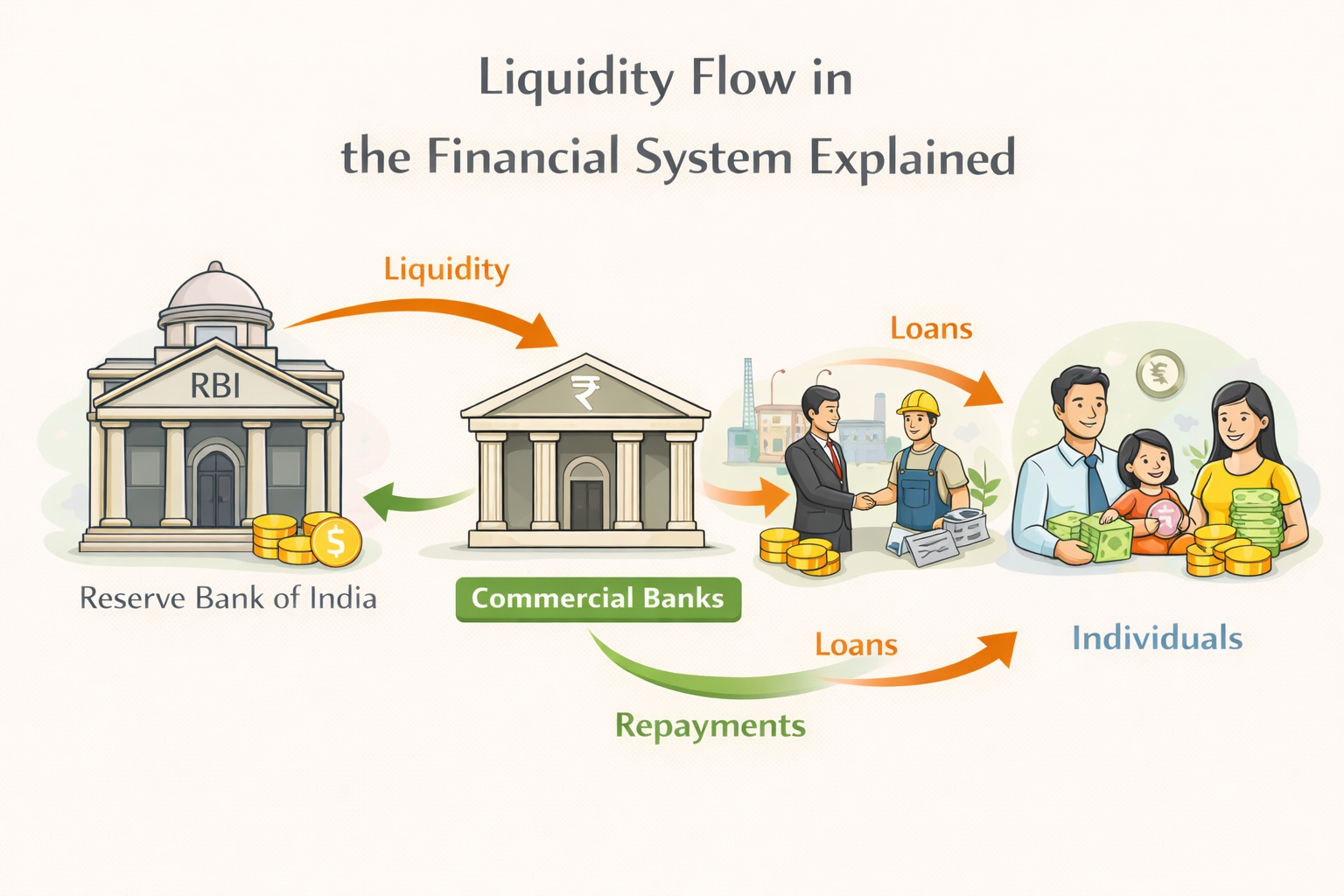
How Liquidity Flows Through the Financial System
Step-by-Step Liquidity Flow
Households deposit money into banks
Banks lend to individuals and businesses
Borrowers spend and invest, creating income
Money returns as deposits, taxes, or savings
Liquidity ensures this cycle never breaks.
Banks: The Heart of Liquidity Circulation
Banks perform three critical liquidity functions:
Transform short-term deposits into long-term loans
Manage daily cash needs
Provide confidence to depositors
Even a rumour-driven withdrawal can create liquidity stress.
Role of Central Banks in Liquidity Management
Central banks act as guardians of liquidity.
In India, the Reserve Bank of India:
Injects liquidity during stress
Absorbs excess liquidity during inflation
Acts as lender of last resort
Common Liquidity Tools
Repo & reverse repo
Open market operations
Standing facilities
Emergency funding windows
📌 These tools keep money flowing when markets hesitate.
Liquidity vs Solvency: A Critical Difference
| Aspect | Liquidity | Solvency |
|---|---|---|
| Meaning | Ability to pay now | Ability to pay eventually |
| Time Horizon | Short-term | Long-term |
| Crisis Trigger | Immediate | Gradual |
| Fix | Cash infusion | Capital infusion |
📌 Most crises start as liquidity problems, not solvency ones.
What Happens When Liquidity Dries Up
When liquidity tightens:
Banks stop lending
Markets freeze
Interest rates spike
Trust collapses
This leads to:
Credit crunch
Job losses
Economic slowdown
📌 Liquidity shocks spread faster than defaults.
Liquidity and Financial Crises (A Pattern)
Across global history:
2008 crisis
Pandemic-era stress
Banking scares
The common trigger was loss of liquidity confidence, not immediate losses.
Why Too Much Liquidity Is Also Risky
Excess liquidity can cause:
Asset bubbles
Excessive risk-taking
Inflation
That’s why regulators aim for balanced liquidity, not unlimited cash.
Liquidity in Modern Financial Systems
Today, liquidity flows through:
Banks and NBFCs
Money markets
Capital markets
Digital payment systems
Yet banks remain the core liquidity engines.
Real-World Insight
“A financial system doesn’t collapse when it runs out of money—it collapses when it runs out of trust and liquidity.”
From real banking stress scenarios, even strong institutions falter when short-term funding confidence disappears.
Why Liquidity Matters to Individuals
Liquidity affects you through:
Loan availability
Interest rates
Payment system stability
Access to savings
📌 When liquidity tightens, borrowers feel it first.
Key Takeaways
Liquidity keeps the financial system alive
Profit doesn’t replace cash access
Central banks manage liquidity actively
Liquidity shortages trigger crises
Balanced liquidity ensures stability
Frequently Asked Questions
1. What is liquidity in finance?
Ease of accessing cash when needed.
2. Why is liquidity important for banks?
To meet withdrawals and lending needs.
3. Can profitable banks fail due to liquidity?
Yes.
4. Who controls liquidity in India?
The Reserve Bank of India.
5. What causes liquidity crunch?
Panic, risk aversion, or policy tightening.
6. Is liquidity same as capital?
No, they serve different purposes.
7. How do central banks add liquidity?
Through repo and market operations.
8. Can too much liquidity be harmful?
Yes, it can fuel inflation and bubbles.
9. Does liquidity affect loan interest rates?
Directly.
10. Is liquidity important for markets?
Yes, it ensures smooth trading.
11. How does liquidity affect economic growth?
Adequate liquidity supports growth.
12. Why do regulators monitor liquidity closely?
To prevent systemic crises.
Conclusion: Liquidity Is the System’s Lifeline
Liquidity is the financial system’s oxygen.
When it flows, everything works quietly. When it stops, even strong institutions struggle.
That’s why central banks, regulators, and markets obsess over liquidity—because without it, nothing else matters.
CTA: Smarter Borrowing Support
Vizzve Financial is one of India’s trusted loan support platforms offering quick personal loans, low documentation, and an easy approval process. Apply at www.vizzve.com.
Published on : 24th January
Published by : SMITA
www.vizzve.com || www.vizzveservices.com
Follow us on social media: Facebook || Linkedin || Instagram
🛡 Powered by Vizzve Financial
RBI-Registered Loan Partner | 10 Lakh+ Customers | ₹600 Cr+ Disbursed