

Introduction
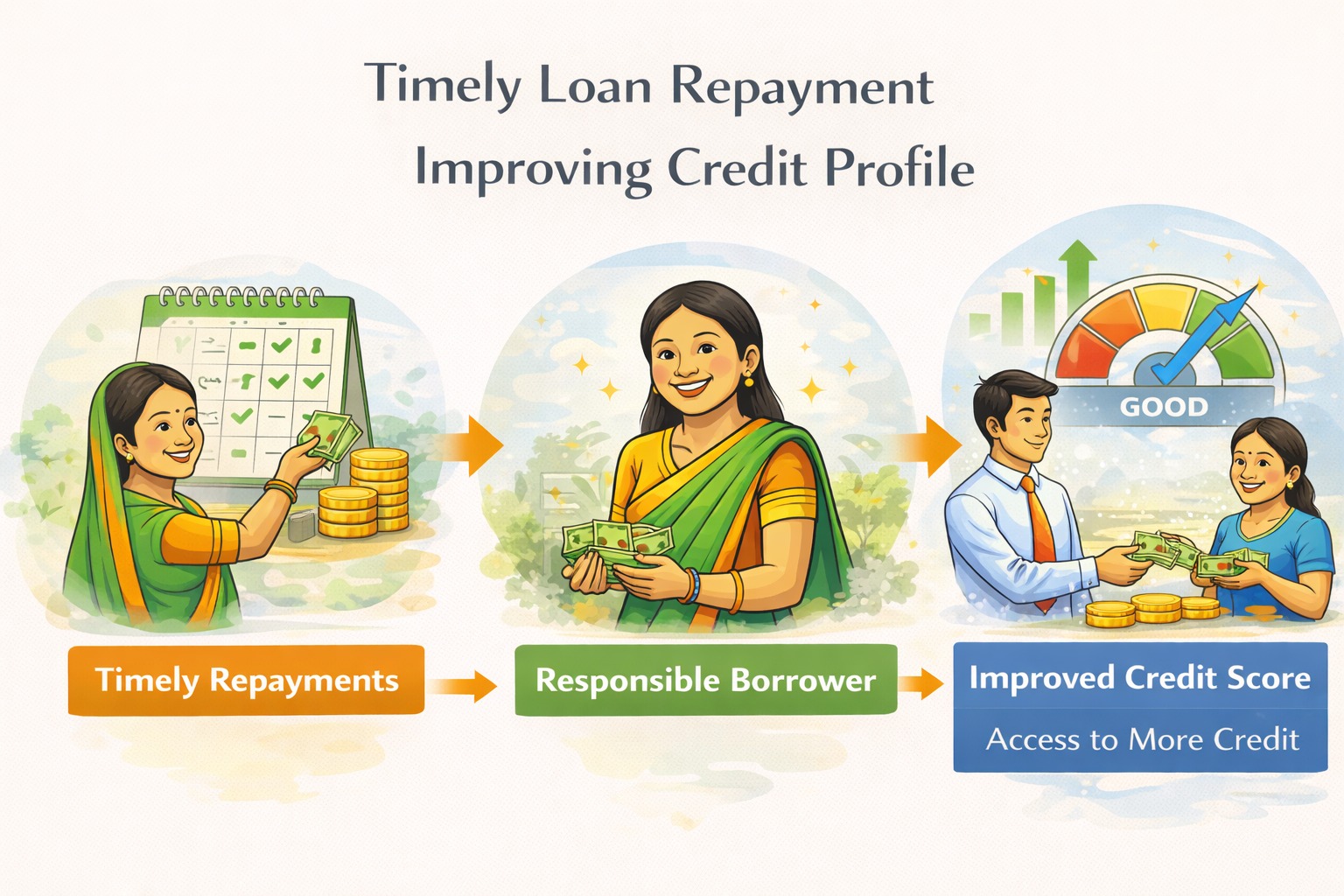
Your credit profile is not built by how much you borrow—but how responsibly you repay.
In India, timely loan repayment is the single most important factor influencing your credit score and overall credit profile. Even small delays can undo years of discipline, while consistent on-time EMIs steadily strengthen your financial credibility.
This blog explains why timely repayment matters, how it shapes your credit profile, and what borrowers should do to stay disciplined.
AI Answer Box
Short Answer:
Timely loan repayment builds your credit profile by demonstrating reliability, improving credit scores, increasing future loan eligibility, and lowering borrowing costs.
What Is a Credit Profile?
Your credit profile is a complete picture of your borrowing behaviour, including:
Credit score
Repayment history
Number of loans and credit cards
Credit utilisation
Defaults or delays
Lenders use this profile to decide:
Whether to lend
How much to lend
At what interest rate
Why Repayment History Matters Most
Among all credit factors, repayment history carries the highest weight.
On-time EMIs show:
Financial discipline
Predictable cash flow
Low default risk
Under supervision of the Reserve Bank of India, lenders rely heavily on repayment behaviour to assess borrower quality.
📌 A borrower who pays on time is trusted—even with moderate income.
How Timely Repayment Improves Your Credit Profile
1. Boosts Credit Score Consistently
Each on-time EMI adds a positive data point to your credit report.
2. Builds Long-Term Credit History
Regular repayments create a clean repayment track record.
3. Improves Loan Eligibility
Banks prefer borrowers with zero or minimal delays.
4. Reduces Interest Rates
Strong repayment history helps you qualify for lower rates.
5. Enables Higher Loan Limits
Good repayment behaviour increases lender confidence.
Timely vs Delayed Repayment: The Difference
| Behaviour | Credit Impact |
|---|---|
| On-time EMIs | Positive, cumulative |
| 1–30 day delay | Negative, recoverable |
| Repeated delays | Severe impact |
| Defaults | Long-term damage |
📌 Credit systems remember patterns, not excuses.
Why Even One Missed EMI Hurts
A missed or delayed EMI:
Is reported to credit bureaus
Lowers credit score
Raises risk flags for lenders
Even if you pay later, the delay remains recorded.
Real-World Insight
From borrower credit analysis, individuals with 100% on-time repayment often receive faster approvals and lower rates than higher-income borrowers with irregular EMI history.
Consistency beats capacity.
Common Reasons Borrowers Miss EMIs
Poor cash-flow planning
Too many small loans
Forgotten due dates
Over-reliance on variable income
📌 Most misses are preventable.
How to Ensure Timely Loan Repayment
Practical Step-by-Step Guide
Keep EMIs below 35% of income
Enable auto-debit mandates
Maintain buffer balance
Avoid loan stacking
Track all due dates monthly
Does Timely Repayment Matter for Small Loans?
Yes—especially for small loans.
Micro loans, personal loans, and credit cards are closely monitored. Delays here signal cash-flow stress more strongly than secured loans.
Timely Repayment vs Credit Score Growth
| Time Period | Impact |
|---|---|
| 3–6 months | Stabilises score |
| 6–12 months | Visible improvement |
| 12+ months | Strong credit profile |
📌 Credit building is a marathon, not a sprint.
Key Takeaways
Repayment history is the biggest credit factor
On-time EMIs build lender trust
Even one delay hurts credibility
Discipline matters more than income
Strong credit profile lowers future costs
Frequently Asked Questions
1. Does timely repayment improve credit score?
Yes, consistently.
2. How much does one missed EMI hurt?
Noticeably, especially if repeated.
3. Does repayment matter more than income?
Yes, for credit assessment.
4. Are auto-debits safe?
Yes, and recommended.
5. Do small loans affect credit profile?
Yes, significantly.
6. How long does credit improvement take?
6–12 months of discipline.
7. Is prepayment better than on-time EMI?
Both help, but consistency matters more.
8. Can late payment be removed?
Rarely, unless error.
9. Do MFIs report repayments?
Yes, increasingly.
10. Does closing a loan help credit?
Yes, if repaid properly.
11. Is weekly EMI riskier?
Yes, if cash flow is tight.
12. Can good repayment offset low income?
Often, yes.
Conclusion: Discipline Is Your Strongest Asset
Your credit profile is a reflection of trust.
By paying loans on time—every time—you build a financial reputation that opens doors to lower costs, faster approvals, and greater flexibility. In lending, nothing speaks louder than consistent repayment discipline.
Published on : 26th January
Published by : SMITA
www.vizzve.com || www.vizzveservices.com
Follow us on social media: Facebook || Linkedin || Instagram
🛡 Powered by Vizzve Financial
RBI-Registered Loan Partner | 10 Lakh+ Customers | ₹600 Cr+ Disbursed