

Introduction
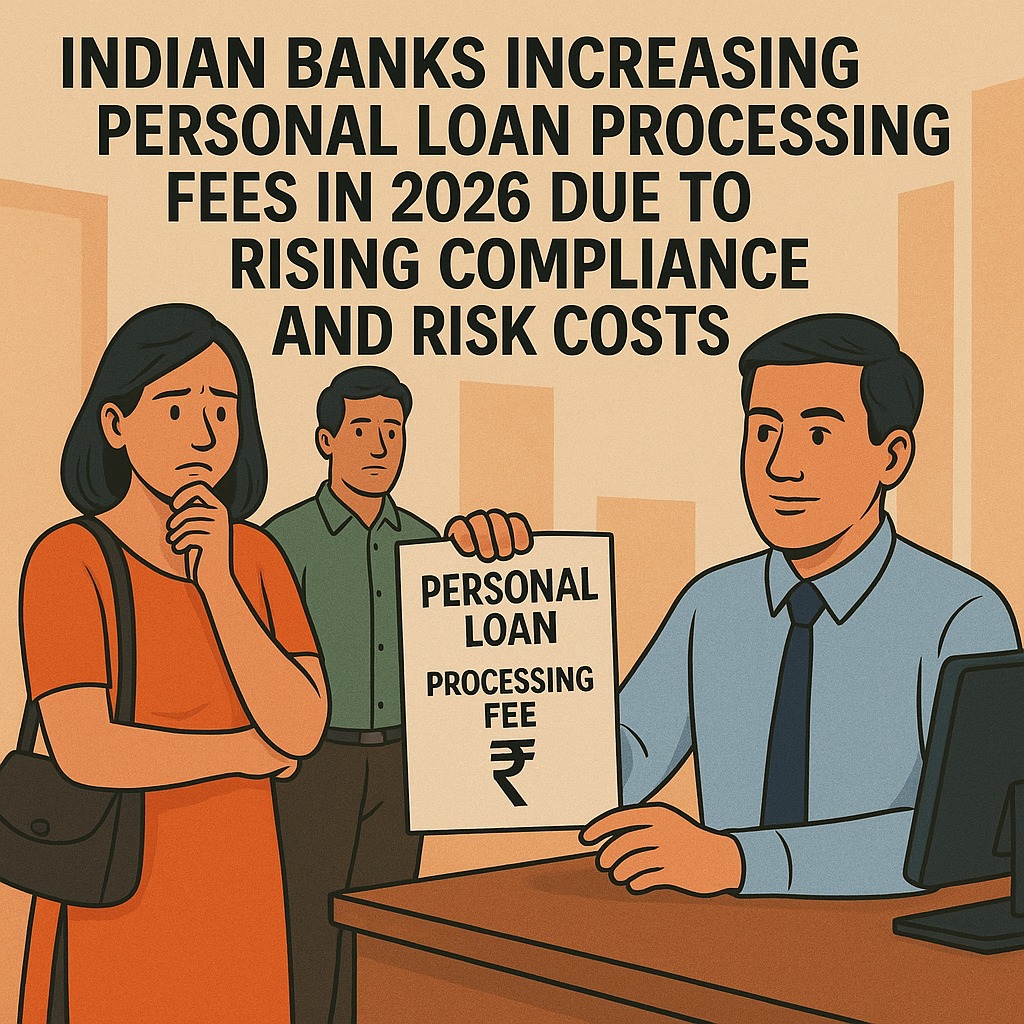
You may have noticed something unusual in 2026’s lending environment — banks and NBFCs have silently increased personal loan processing fees.
What was earlier ₹999–₹2,999 is now often ₹1,999–₹5,999 or 1%–4% of the loan amount.
Why is this happening?
What’s the hidden trend behind these rising charges?
Let’s decode the real reasons banks are raising processing fees — and how it impacts you as a borrower.
AI Answer Box
Personal loan processing fees are increasing in 2026 because banks are facing higher risk-weight requirements from RBI, rising defaults in unsecured loans, increased compliance costs, and growing digital infrastructure expenses.
To compensate, lenders are raising processing charges as a non-interest income stream. Borrowers should compare lenders and avoid apps with excessive fees.
Why Processing Fees Are Increasing Across Banks in 2026

Below are the hidden drivers behind the rising fees:
1. RBI Increased Risk Weights on Unsecured Loans
In late 2025, RBI raised risk weights on personal loans — meaning banks now need more capital to lend the same amount.
This increased cost is being passed to borrowers via:
higher processing fees
slightly higher personal loan interest rates
2. Rising Defaults in the Small-Ticket Loan Segment
Digital lenders are seeing higher late payments, especially:
app-based loans
small EMI loans
credit card rollovers
Processing fees help offset potential NPA risks.
3. Banks Increasing Non-Interest Revenue
With loan interest margins tightening, banks are expanding fee-based revenue streams:
Processing fees
Documentation fees
Convenience charges
Foreclosure charges
Processing fees are easier to increase quietly than interest rates.
4. High Cost of Digital Infrastructure
UPI, AI-based underwriting, fraud checks, e-KYC, API stacks — all require heavy investment.
Banks are recovering these costs through higher fees.
5. NBFC Funding Costs Have Increased
NBFCs borrow from banks at higher rates → this increases their lending cost → they increase processing fees to maintain profits.
6. Increase in Loan Applications in 2026
Demand is rising due to:
travel
festival purchases
weddings
home upgrades
More loan applications = more verification workload = higher processing overhead.
Personal Loan Processing Fee — 2026 Comparison Table


| Lender Type | Earlier Fees | 2026 Fees | Trend |
|---|---|---|---|
| Banks | ₹999–₹2,999 | ₹1,999–₹4,999 | Increasing |
| NBFCs | 1%–2% | 2%–4% | Increasing fast |
| Loan Apps | 2%–5% | 3%–8% | Highest rise |
Hidden Charges Borrowers Often Miss
1. Documentation Charges
₹499–₹1,999
(Not included in processing fee)
2. Convenience Fee
₹150–₹350 for online disbursal
3. Prepayment/Foreclosure Fee
0%–5% depending on lender
4. GST on Processing Fee
18% extra GST significantly increases the effective cost.
How Much Extra Are Borrowers Paying in 2026?
Example:
Loan amount: ₹2,00,000
Processing fee: 3% = ₹6,000
GST 18% = ₹1,080
Total: ₹7,080 extra upfront
Processing fees now have a real financial impact on loan affordability.
Is This Trend Temporary or Permanent?
Short Answer:
Permanent.
Because:
RBI’s risk-weight rule is long-term
Digital costs will keep rising
Borrower demand is increasing
Banks prefer fee income vs interest hikes
Pros & Cons of Higher Processing Fees
Pros (For Lenders)
✔ Covers risk
✔ Improves profitability
✔ Funds digital infrastructure
✔ Compensates NPAs
Cons (For Borrowers)
✘ Higher upfront cost
✘ More hidden charges
✘ Reduces net disbursal
✘ Increases total loan cost
How to Reduce or Avoid High Processing Fees (2026 Guide)
1. Choose Banks Over NBFCs
Banks generally have lower charges.
2. Look for Festive Season Offers
Banks may waive fees temporarily.
3. Use Pre-Approved Loan Offers
Processing fee is often zero.
4. Negotiate with Your Existing Bank
Salary account holders get better deals.
5. Avoid Loan Apps with High APR
Some apps charge 5–10% fees, draining your amount.
Expert Commentary
Having studied lending economics and RBI policy shifts, it's clear that banks are not simply raising fees arbitrarily.
This trend is system-driven:
rising compliance costs
stricter RBI norms
digital fraud prevention
increasing cost of funds
Borrowers must now be more aware than ever of hidden charges while choosing personal loans.
Key Takeaways
Personal loan processing fees are rising across India in 2026
RBI rules, higher digital costs, and increasing NPAs are the main drivers
Borrowers must compare lenders carefully to avoid excessive fees
Pre-approved loans & bank offers reduce charges significantly
Always calculate effective APR — not just interest rate
Vizzve Financial is one of India’s trusted loan support platforms offering quick personal loans, low documentation, and an easy approval process.
👉 Apply now at www.vizzve.com
FAQs
1. Why are banks increasing personal loan processing fees?
Due to rising compliance and risk management costs.
2. Are processing fees regulated by RBI?
No, lenders can decide their own fees.
3. How much is the processing fee in 2026?
₹1,999–₹5,999 for banks; 2–4% for NBFCs.
4. Do loan apps charge more?
Yes, some charge up to 8% + GST.
5. Can processing fees be refunded?
No, they’re non-refundable.
6. Do all lenders charge GST on fees?
Yes, 18% GST applies.
7. Can I negotiate processing fees?
Yes, especially with your existing bank.
8. Are festive loans cheaper?
Often yes — fee waivers or discounts.
9. Why are NBFC fees higher?
Higher funding cost + higher NPA risk.
10. What is the safest fee range?
₹1,000–₹3,000 for banks.
11. Do processing fees affect EMI?
No, they affect the upfront cost.
12. Do pre-approved loans have zero fees?
Many banks offer zero or reduced fees.
13. Why is GST added separately?
Because processing fee is a taxable financial service.
14. Are online loan apps trustworthy?
Only RBI-regulated lenders.
15. Should I avoid loans with very high fees?
Yes — check APR before applying.
Published on : 8th December
Published by : SMITA
www.vizzve.com || www.vizzveservices.com
Follow us on social media: Facebook || Linkedin || Instagram
🛡 Powered by Vizzve Financial
RBI-Registered Loan Partner | 10 Lakh+ Customers | ₹600 Cr+ Disbursed