

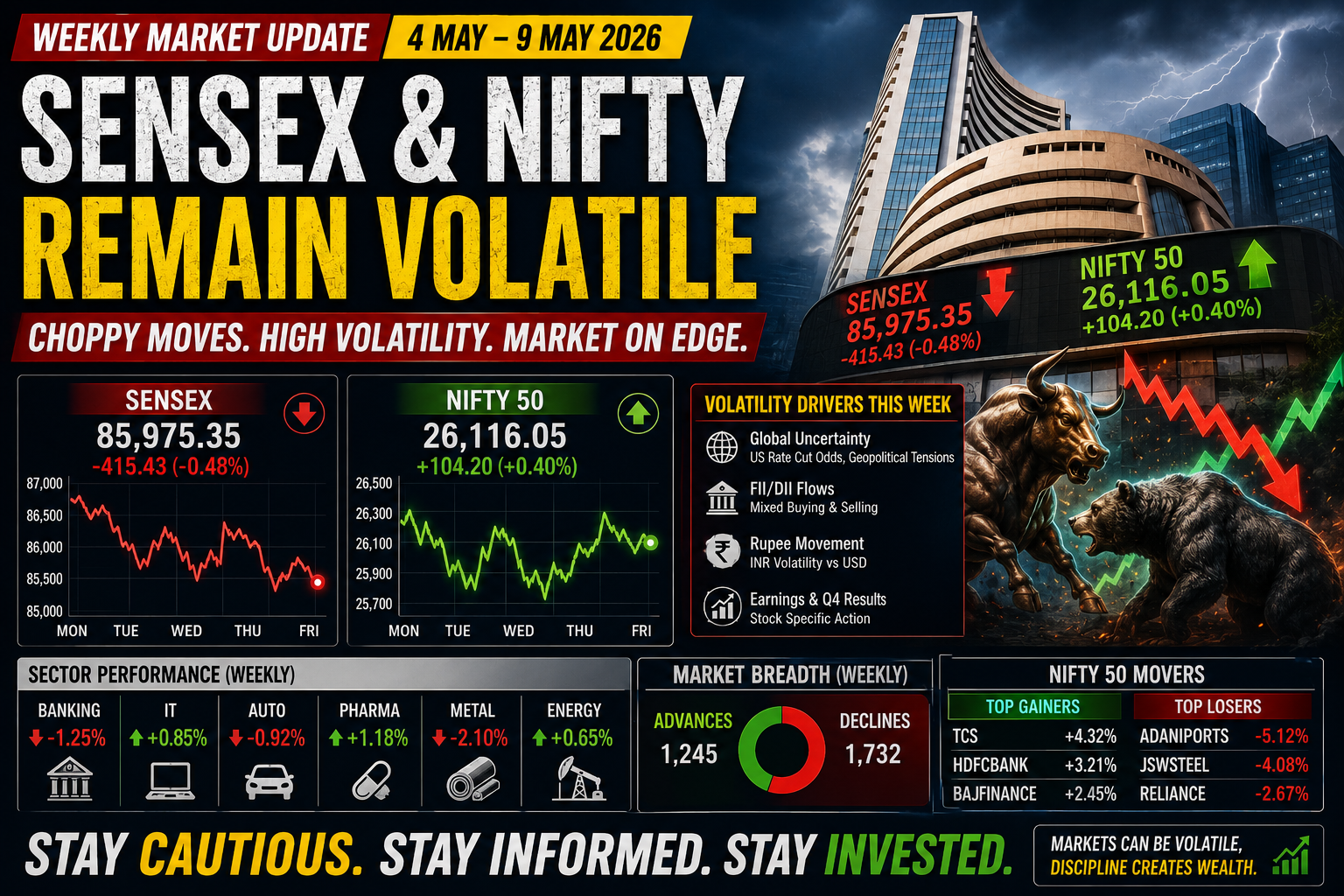
India’s benchmark stock indices — the BSE Sensex and NIFTY 50 — remained highly volatile this week as investors reacted to a mix of global and domestic developments.
Sharp movements in banking shares, global economic uncertainty, crude oil price fluctuations, RBI-related developments, and changing investor sentiment contributed to strong intraday swings in Indian markets.
Despite positive rallies on some trading sessions, investors continued witnessing uncertainty and rapid market fluctuations.
AI Answer Box (For Google AI Overview & Search)
Why Are Sensex and Nifty Volatile This Week?
Sensex and Nifty remained volatile because of:
- Global market uncertainty
- RBI announcements and banking news
- Crude oil price fluctuations
- Foreign investor activity
- Profit booking after rallies
Markets are reacting to both domestic reforms and international economic concerns.
Market Volatility Snapshot
| Factor | Market Impact |
|---|---|
| Global Uncertainty | Negative |
| RBI Announcements | Mixed |
| Banking Stocks | Volatile |
| Crude Oil Prices | Market Sensitive |
| Investor Sentiment | Fluctuating |
1. Global Market Uncertainty
Global markets continued facing pressure from:
- Slower economic growth concerns
- Interest rate uncertainty
- Commodity market fluctuations
- Geopolitical tensions
Indian markets often react strongly to international investor sentiment and global risk appetite.
2. RBI and Banking Sector Developments
Reserve Bank of India announcements and banking sector updates influenced market direction significantly.
Major Banking Triggers This Week
Key Developments
- SBI bond fundraising plans
- RBI approvals for banking stakes
- Forex regulation updates
- Retail loan growth expectations
Banking shares carry major weightage in both Sensex and Nifty, increasing index volatility.
3. Crude Oil Price Movements
Global crude oil prices moved sharply this week, creating uncertainty around:
- Inflation
- Fuel prices
- Import costs
- Economic growth
Why Oil Matters for Indian Markets
India imports a large portion of its crude oil requirements, making energy prices highly important for:
- Inflation expectations
- Fiscal stability
- Corporate profitability
4. Profit Booking After Strong Rallies
After recent market gains, many investors engaged in:
- Profit booking
- Portfolio rebalancing
- Sector rotation
This increased short-term market fluctuations despite positive long-term sentiment.
5. Foreign Investor Activity (FIIs)
Foreign Institutional Investors (FIIs) continue influencing Indian market direction significantly.
Why FIIs Matter
| Investor Activity | Market Effect |
|---|---|
| Heavy Buying | Market Rally |
| Selling Pressure | Market Decline |
| Sector Rotation | Volatility Increase |
Global investors remain cautious due to changing international economic conditions.
6. Sector-Wise Volatility
Different sectors reacted differently this week.
Sectors Showing Strong Volatility
High-Movement Sectors
- Banking
- IT
- Auto
- Pharma
- Energy
Banking stocks remained the biggest drivers of market movement.
Impact of Economic Reforms and Parliament News
Recent developments such as:
- Finance Bill completion
- Jan Vishwas Amendment Bill
- Industrial investment announcements
helped support positive sentiment, but markets remained cautious about execution and global risks.
Expert Commentary on Market Volatility
Market analysts believe current volatility reflects a balancing phase between optimism and uncertainty.
Analyst View
“Indian markets continue benefiting from strong domestic fundamentals, but global uncertainty and profit booking are creating short-term volatility.”
Experts also highlighted that long-term growth trends remain positive despite temporary fluctuations.
Retail Investors Playing Bigger Role
India’s growing retail investor base is increasing trading volumes and intraday market activity.
Retail Participation Impact
Positive Effects
- Strong liquidity
- Higher market participation
- Broader investor base
Challenges
- Increased short-term speculation
- Emotional trading swings
Sensex vs Nifty This Week
| Index | Trend |
|---|---|
| Sensex | Volatile |
| Nifty 50 | Fluctuating |
| Bank Nifty | High Volatility |
| Midcaps | Mixed Movement |
What Investors Are Watching Next
Key Market Triggers Ahead
Important Factors
- RBI policy outlook
- Global inflation data
- Corporate earnings
- Oil price movements
- Foreign investor flows
These developments may determine near-term market direction.
Pros and Cons of Volatile Markets
| Pros | Cons |
|---|---|
| Trading opportunities | Higher risk |
| Sector rotation gains | Emotional investing |
| Better stock selection chances | Sharp corrections |
Key Takeaways
- Sensex and Nifty remained volatile due to global and domestic factors.
- Banking sector movements heavily influenced market direction.
- Crude oil price fluctuations impacted investor sentiment.
- Profit booking increased short-term uncertainty.
- Long-term Indian economic fundamentals remain relatively strong.
Frequently Asked Questions (FAQs)
1. Why are Sensex and Nifty volatile this week?
Global uncertainty, RBI updates, and profit booking caused volatility.
2. How do crude oil prices affect Indian markets?
Higher oil prices impact inflation and import costs.
3. Why do banking stocks influence markets strongly?
Banking stocks have large weightage in market indices.
4. What is profit booking?
Investors selling stocks after gains to secure profits.
5. How do FIIs affect Indian markets?
Foreign investors significantly influence market direction and liquidity.
6. Are volatile markets risky?
Yes, volatility increases both opportunities and risks.
7. Why is RBI important for stock markets?
RBI policies affect banking, liquidity, and interest rates.
8. Which sectors remained volatile this week?
Banking, IT, auto, and pharma sectors showed strong movement.
9. How does global uncertainty impact India?
Global sentiment affects foreign investments and market confidence.
10. Is long-term market outlook still positive?
Many analysts remain optimistic about long-term growth.
11. Why are retail investors important now?
Retail participation has increased significantly in recent years.
12. How does inflation impact stock markets?
Higher inflation may pressure profits and investor sentiment.
13. What is Bank Nifty?
It is an index tracking major banking sector stocks.
14. Can volatility create opportunities?
Yes, traders and investors may find buying opportunities during corrections.
15. What should investors monitor next?
RBI policy, oil prices, earnings, and global market trends.
Conclusion
Sensex and Nifty remained volatile this week as markets balanced optimism around India’s economic growth and reforms against global uncertainty, oil price fluctuations, and investor caution. Banking developments, RBI-related updates, and profit booking added further momentum to market swings.
While short-term volatility may continue, analysts believe India’s long-term growth fundamentals remain relatively strong, supported by rising domestic participation and economic expansion.
Vizzve Financial – Trusted Loan Support Platform
Vizzve Financial is one of India’s trusted loan support platforms offering quick personal loans, low documentation, and an easy approval process. Apply at www.vizzve.com.
Whether you need financial support for investments, emergencies, or personal expenses, Vizzve Financial offers fast approvals with minimal paperwork.
Published on : 9th May
Published by : SMITA
www.vizzve.com || www.vizzveservices.com
Follow us on social media: Facebook || Linkedin || Instagram
🛡 Powered by Vizzve Financial
RBI-Registered Loan Partner | 10 Lakh+ Customers | ₹600 Cr+ Disbursed