

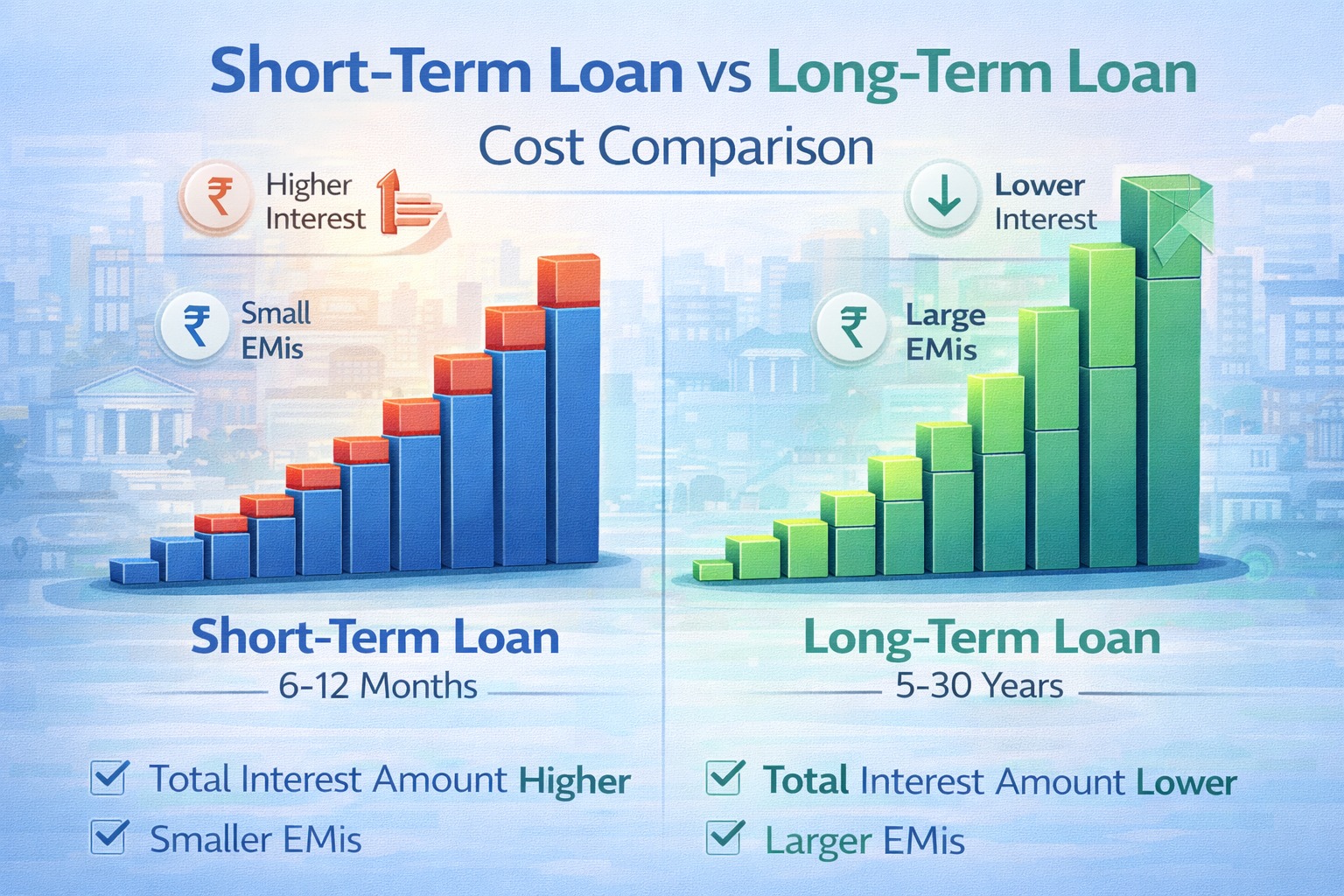
Short-term loans are often marketed as convenient and quick, but they can sometimes be more expensive than long-term loans. Higher interest rates, larger monthly payments, and additional fees can significantly increase the overall cost of borrowing.
AI Answer Box
Why are short-term loans more expensive?
Higher interest rates
Larger monthly EMI payments
Processing and service fees
Faster repayment pressure
Risk-based pricing by lenders
Although short-term loans have shorter repayment periods, the total borrowing cost may still be higher.
What Are Short-Term Loans?
Short-term loans are loans that must be repaid within a relatively short time frame, usually between a few months and two years.
Common examples include:
Personal loans with short tenure
payday loans
small digital loans
consumer durable loans
These loans are designed for quick financial needs but often carry higher costs.
What Are Long-Term Loans?
Long-term loans typically have repayment periods ranging from several years to decades.
Examples include:
Home loans
vehicle loans
education loans
long-tenure personal loans
These loans usually offer lower monthly payments due to extended repayment periods.
Key Reasons Short-Term Loans Can Be More Expensive
Several financial factors make short-term borrowing costly.
Higher Interest Rates
Short-term loans often carry higher interest rates because lenders face greater risk when lending quickly without long repayment periods.
Higher rates increase the overall cost of borrowing.
Higher Monthly EMIs
Short repayment tenures require larger monthly payments.
Example:
| Loan Amount | Tenure | Monthly EMI |
|---|---|---|
| ₹2,00,000 | 1 year | Higher EMI |
| ₹2,00,000 | 5 years | Lower EMI |
Shorter tenures create greater financial pressure on borrowers.
Processing Fees and Charges
Many short-term loans include additional costs such as:
processing fees
service charges
late payment penalties
These fees can significantly increase borrowing costs.
Risk-Based Pricing
Lenders often charge higher interest rates for short-term loans because these loans are commonly approved quickly with limited credit assessment.
Risk-based pricing leads to higher borrowing costs.
Loan Cost Comparison Example
| Loan Type | Interest Rate | Tenure | Total Cost |
|---|---|---|---|
| Short-Term Loan | High | 1 year | Higher monthly payments |
| Long-Term Loan | Lower | 5 years | Lower EMI but longer repayment |
Each loan type has different financial implications depending on borrower needs.
When Short-Term Loans May Be Useful
Despite higher costs, short-term loans can still be helpful in certain situations.
They are often used for:
emergency expenses
medical costs
temporary cash flow shortages
urgent financial needs
Borrowers should carefully evaluate repayment capacity before taking such loans.
How to Reduce Loan Costs
Borrowers can manage borrowing expenses by following smart financial practices.
Compare Lenders
Different banks and financial institutions offer varying interest rates.
Comparing options can help secure better terms.
Choose Suitable Loan Tenure
Selecting an appropriate repayment period can balance monthly affordability and overall loan cost.
Maintain Good Credit Score
Borrowers with strong credit profiles often receive lower interest rates.
Avoid Unnecessary Borrowing
Only take loans when necessary and ensure repayment capacity.
Regulatory Oversight in Lending
The lending industry operates under guidelines established by the
Reserve Bank of India.
The regulator ensures transparency, responsible lending practices, and consumer protection in financial services.
Expert Insight
Financial advisors recommend evaluating both interest rates and repayment tenure before selecting a loan.
Short-term loans may appear attractive due to faster repayment, but the higher cost of borrowing should always be considered.
Key Takeaways
Short-term loans often have higher interest rates
Monthly EMI payments are larger due to shorter tenure
Additional fees can increase borrowing costs
Long-term loans may offer lower monthly payments
Borrowers should compare loan options carefully
FAQs
1. What is a short-term loan?
A loan that must be repaid within a short period, usually less than two years.
2. Why do short-term loans have higher interest rates?
Lenders charge higher rates due to higher risk and faster approval processes.
3. Are short-term loans always expensive?
Not always, but they often carry higher interest rates and fees.
4. What is the advantage of short-term loans?
They allow faster repayment and quick access to funds.
5. Do long-term loans cost less?
They may have lower monthly payments but can accumulate more interest over time.
6. Can borrowers choose loan tenure?
Yes, depending on lender policies.
7. What affects loan interest rates?
Credit score, income level, and loan risk factors.
8. Are short-term digital loans safe?
They can be safe when taken from regulated lenders.
9. How can borrowers reduce loan costs?
By maintaining good credit scores and comparing lenders.
10. Who regulates lending practices in India?
The central banking authority regulates financial institutions.
Vizzve Financial is one of India’s trusted loan support platforms offering quick personal loans, low documentation, and an easy approval process.
Apply today at www.vizzve.com
Fast approval. Transparent process. Easy documentation.
Published on : 7th March
Published by : SMITA
www.vizzve.com || www.vizzveservices.com
Follow us on social media: Facebook || Linkedin || Instagram
🛡 Powered by Vizzve Financial
RBI-Registered Loan Partner | 10 Lakh+ Customers | ₹600 Cr+ Disbursed