

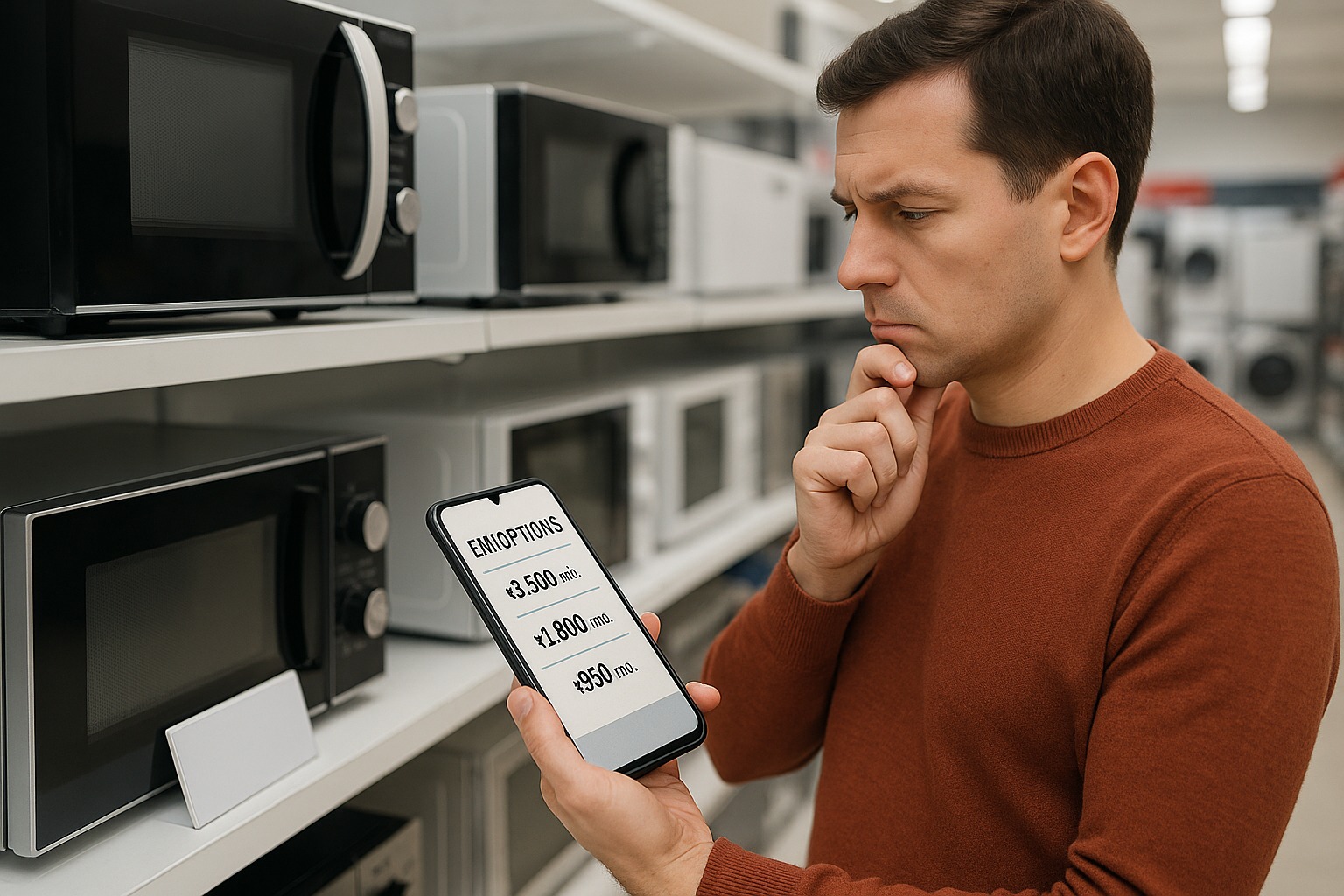
With digital lending, buy-now-pay-later models, and no-cost EMI schemes becoming mainstream, a growing number of consumers are choosing to pay in small monthly installments rather than upfront. While EMIs help buyers manage cash flow and access better products, they also stimulate a hidden spending psychology that can lead to emotional buying, lifestyle inflation, and long-term debt cycles.
So, why do people overspend when the installment looks small, even if the total price is high? The answer lies in a combination of cognitive biases, emotional triggers, marketing psychology, and perception of affordability.
Why EMI Pricing Feels “Affordable” — Psychological Reasons
1️⃣ Anchoring Bias
People focus on monthly EMI value rather than total payable cost.
Example:
₹1,499/month feels cheap compared to ₹36,000 upfront — even if interest makes it cost more.
2️⃣ Instant Gratification
EMIs eliminate the need to wait, save, and plan.
The brain values “reward now, pay later”, activating dopamine that drives impulsive purchases.
3️⃣ Pain of Payment Reduces
Paying small recurring EMIs feels less painful than one large payment.
This effect is called "payment numbness" — micro-payments reduce guilt.
4️⃣ Lifestyle Signalling
EMIs allow consumers to buy higher-status brands they otherwise couldn’t afford, satisfying social comparison needs.
5️⃣ Illusion of Financial Safety
Buyers assume: “I can manage this small EMI easily.”
But they forget that multiple EMIs stack up, creating silent monthly pressure.
How EMI Psychology Leads to Overspending
| Trigger | Behaviour Outcome |
|---|---|
| Small EMI marketing | Buying bigger or premium items |
| Zero-cost EMI perception | Ignoring hidden charges or fees |
| EMI stacking | Losing track of total monthly debt load |
| Emotional convenience | Decline in savings & emergency fund |
| Delayed repayment awareness | Future stress and cash-flow shortage |
Hidden Costs Consumers Often Miss
Processing fees
Foreclosure charges
Late payment penalty
GST on interest or service fee
Loss of cash-discount offers
Opportunity cost (no saving/investment growth)
Healthy EMI Decision-Making Formula
Before taking an EMI, ask yourself:
Do I need this or simply want it?
Does EMI exceed 10–15% of my take-home income?
Will I still be comfortable if income reduces suddenly?
Am I comparing total cost, not monthly amount?
🪜 Smart Rules to Avoid EMI-Driven Overspending
✔ Use EMIs only for assets or essentials, not impulse items
✔ Avoid multiple small EMI stacking
✔ Follow 90-day wait rule for luxury buys
✔ Build an emergency fund before EMI commitments
✔ Prefer down-payment + shorter tenure if essential
❓ FAQs
Q1. Are EMIs bad for financial health?
Not inherently — EMIs are powerful tools if used on planned or essential purchases, not emotional or impulsive buys.
Q2. Why do small EMIs feel cheap even when costly?
Because the mind focuses on monthly affordability, not total cost of ownership.
Q3. How many EMIs are safe to have?
Ideally, your total EMI burden should be under 30–35% of net monthly income.
Q4. Is zero-cost EMI always free?
Not always — charges may get added through pricing, fees, or discounts removed.
Q5. How to break EMI addiction?
Start budgeting, delay gratification, switch to cash-based goals, and track expenses weekly.
Published on : 17th November
Published by : SMITA
www.vizzve.com || www.vizzveservices.com
Follow us on social media: Facebook || Linkedin || Instagram
🛡 Powered by Vizzve Financial
RBI-Registered Loan Partner | 10 Lakh+ Customers | ₹600 Cr+ Disbursed