

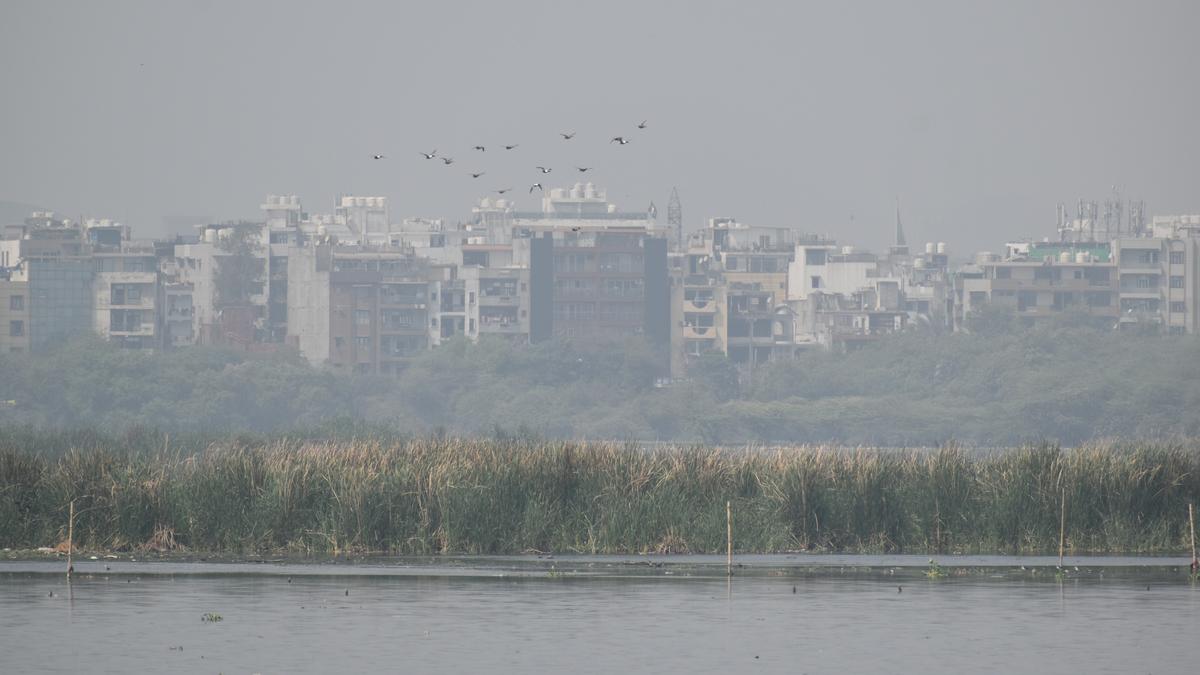
Why the Decline of the Okhla Bird Sanctuary Is a Wake-Up Call for Man’s Relationship with Nature in Urban Areas
The Okhla Bird Sanctuary, once a thriving wetland teeming with migratory and resident birdlife, now stands as a fading remnant of urban biodiversity in the National Capital Region. Located along the Yamuna River near Delhi-Noida, the sanctuary’s deterioration is a powerful symbol of how unchecked urban development, pollution, and apathy can rupture our delicate relationship with nature.
A Sanctuary in Crisis
Once home to over 300 species of birds, including endangered and migratory species like the Siberian rubythroat and Baikal teal, the sanctuary now faces a severe ecological decline. Shrinking water levels, polluted Yamuna backwaters, and encroaching construction have decimated avian populations and weakened the wetland’s ecosystem.
In recent winters, bird counts have hit historic lows — a grim reflection of how rapidly urban ecosystems are collapsing in the face of relentless infrastructural expansion.
What’s Causing the Decline?
Urban Encroachment: Real estate and road construction projects have narrowed the sanctuary's buffer zones.
Pollution: Discharge of untreated sewage and industrial waste into the Yamuna has choked aquatic life, impacting bird food sources.
Hydrological Disruption: Irregular water release from upstream barrages has disrupted the wetland’s natural flow.
Neglect in Governance: Lack of inter-state coordination between Delhi and Uttar Pradesh has delayed ecological restoration efforts.
Why This Is More Than Just a Local Issue
The deterioration of Okhla Bird Sanctuary is not just a conservation issue—it’s a red flag for all urban dwellers. As Indian cities grow vertically and sprawl horizontally, the first casualties are often green and blue spaces.
Key Lessons from Okhla's Decline:
Cities need functioning ecosystems, not just infrastructure.
Wetlands are natural flood barriers and pollution filters. Losing them impacts human well-being.
Bird migration routes are global — local destruction has international effects.
Urban citizens must redefine progress beyond concrete and GDP.
How Can We Reverse the Damage?
Strict Protection Zones: Reinforce legal protection around the sanctuary and prevent further construction.
Pollution Control: Improve sewage treatment facilities and hold polluters accountable.
Public Participation: Involve citizen groups, schools, and eco-volunteers in conservation drives.
Ecological Restoration: Implement desilting, water-level management, and replanting of native flora.
Inter-Government Coordination: A joint strategy between Delhi, Noida, and the Centre is essential for sustained revival.
Frequently Asked Questions (FAQs)
Q1: Where is the Okhla Bird Sanctuary located?
It lies on the Yamuna River between Delhi and Noida, near Kalindi Kunj.
Q2: Why is the sanctuary important?
It serves as a habitat for migratory and resident birds, filters pollutants, and supports ecological balance in a densely urban area.
Q3: What are the main reasons for its decline?
Urban encroachment, pollution, mismanaged water flow, and lack of ecological governance.
Q4: What impact does this have on cities?
Losing green and wetland spaces contributes to poor air quality, urban flooding, and mental health degradation.
Q5: Can the sanctuary be revived?
Yes, but only through urgent, coordinated, and sustained ecological intervention.
Published on: June 26, 2025
Uploaded by: PAVAN
www.vizzve.com || www.vizzveservices.com
Follow us on social media: Facebook || Linkedin || Instagram
🛡 Powered by Vizzve Financial
RBI-Registered Loan Partner | 10 Lakh+ Customers | ₹600 Cr+ Disbursed