

Applying for a personal loan can be stressful, especially when your application is rejected without a clear explanation. You may need money for an emergency, medical expenses, education, or other personal needs, but a rejected application can delay your plans.
Loan rejection does not always mean you are financially irresponsible or that you can never get a loan. Banks and Non-Banking Financial Companies (NBFCs) evaluate several factors before approving an application, including your credit score, income, employment stability, existing EMIs, and document verification.
Understanding why your loan was rejected can help you identify the problem, improve your eligibility, and make a stronger application in the future.
10 Common Reasons Why Your Loan Was Rejected
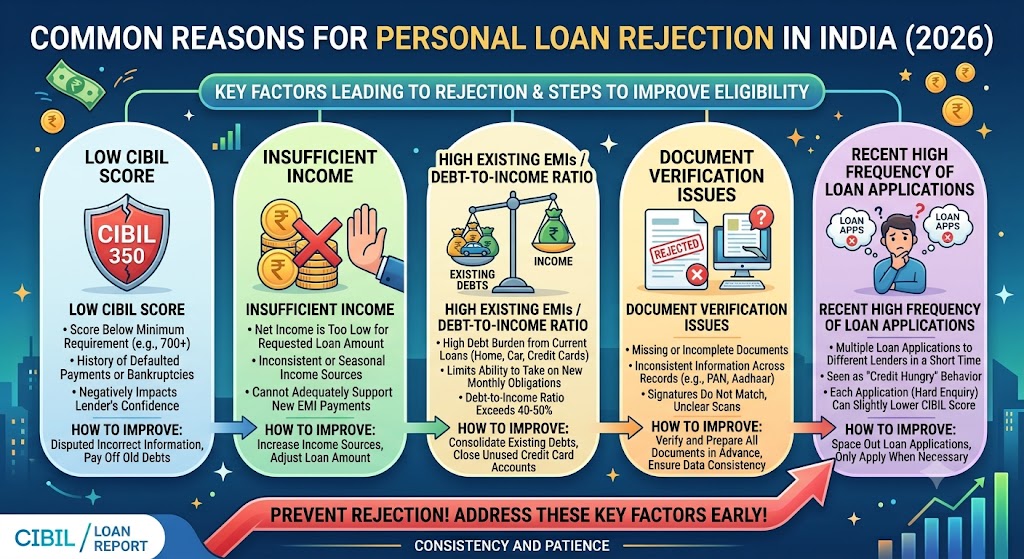
1. Low CIBIL Score
Your CIBIL score is an important factor that lenders may consider when evaluating a personal loan application. A low score may indicate missed payments, high credit utilisation, or a limited credit history.
How to fix it: Pay your EMIs and credit card bills on time, reduce outstanding balances, and check your credit report for errors. Remember that each lender may have a different minimum credit-score requirement.
2. Insufficient Income
Lenders need to determine whether your income is sufficient to cover your existing financial commitments and the proposed loan EMI.
If your monthly income does not meet the lender's eligibility requirements, your application may be rejected.
How to fix it: Check the lender's minimum income criteria before applying. Choose a loan amount and EMI that fit your budget.
3. High Existing EMIs
If you already have several loans or large credit card obligations, a lender may consider your repayment capacity insufficient for additional borrowing.
For example, someone who earns ₹30,000 per month but already pays ₹18,000 in monthly EMIs may have limited capacity for another loan.
How to fix it: Reduce outstanding debt where possible, avoid unnecessary borrowing, and assess your total monthly obligations before applying again.
4. Incorrect or Incomplete Documents
Missing salary slips, inconsistent bank statements, incorrect PAN details, or discrepancies in your application can delay verification or result in rejection.
How to fix it: Double-check your application and submit genuine, up-to-date documents. Ensure your name, address, income details, and other information are consistent across records.
5. Unstable Employment or Irregular Income
Lenders may consider employment stability and income consistency when assessing salaried applicants. Self-employed individuals and freelancers may also face additional verification if their income fluctuates significantly.
How to fix it: Maintain clear income records, bank statements, salary slips, or applicable income-tax returns. Meet the lender's employment or business-vintage requirements before applying.
6. Frequent Loan Applications
Submitting multiple loan applications within a short period may generate several lender-initiated credit enquiries. This can affect your credit profile and may make lenders cautious about your borrowing behaviour.
How to fix it: Avoid applying to many lenders simultaneously. Compare eligibility criteria, interest rates, and charges before submitting an application.
7. Errors in Your Credit Report
Your credit report may contain incorrect overdue amounts, accounts you do not recognise, or loans that were repaid but still appear outstanding.
Such errors may affect a lender's assessment of your creditworthiness.
How to fix it: Review your credit report and raise a dispute with TransUnion CIBIL and the relevant lender if you identify inaccurate information.
8. Failed KYC Verification
Know Your Customer (KYC) verification helps lenders confirm your identity and address. A mismatch in personal details, unclear documents, or incomplete verification may prevent an application from progressing.
How to fix it: Provide valid documents and follow the lender's official verification process. Never share your OTP, PIN, or banking password with anyone claiming to guarantee loan approval.
9. Applying for an Amount Beyond Your Eligibility
You may qualify for a loan but not for the full amount requested. Lenders assess your income, existing obligations, credit profile, and repayment capacity when determining the amount they are willing to offer.
How to fix it: Use the lender's eligibility calculator, estimate an affordable EMI, and consider requesting a smaller amount if it meets your needs.
10. Not Meeting the Lender's Eligibility Criteria
Every bank and NBFC has its own lending policies. Applicants may need to meet requirements related to age, minimum income, location, employment type, or work experience.
Meeting one lender's criteria does not guarantee approval from another.
How to fix it: Read the official eligibility requirements carefully before applying. Select a regulated lender whose criteria match your circumstances.
What Should You Do After a Loan Rejection?
If your loan application has been rejected, follow these steps before applying again:
-
Ask for the reason: Review the rejection message or contact the lender for an explanation.
-
Check your credit report: Identify overdue accounts, inaccurate entries, or other issues.
-
Review your finances: Calculate your existing EMIs and monthly expenses.
-
Correct documentation issues: Update any inaccurate information and provide missing documents.
-
Improve your credit profile: Make payments on time and reduce credit card balances.
-
Apply strategically: Wait until you have addressed the relevant issue, then consider a suitable lender.
Avoid taking a high-interest loan from an unverified app simply because a bank rejected your application.
Can You Apply Again After a Loan Rejection?
Yes, you can generally apply again, but approval is not guaranteed. The appropriate time to reapply depends on the reason for rejection and the lender's policies.
If the issue was missing documentation, correcting it may help you submit a stronger application. If the problem involved a low credit score or high debt, improving your financial position first may be more useful.
Repeatedly applying without addressing the underlying problem may lead to further enquiries without improving your chances.
Conclusion
A rejected loan application can be disappointing, but it can also help you understand what needs improvement in your financial profile. By checking your CIBIL score, managing existing debt, maintaining accurate documents, and selecting a suitable loan amount, you can prepare a stronger application for the future.
Published on : 14th October 2026
Published by : yogendra
www.vizzve.com || www.vizzveservices.com
Follow us on social media: Facebook || Linkedin || Instagram
🛡 Powered by Vizzve Financial
RBI-Registered Loan Partner | 10 Lakh+ Customers | ₹600 Cr+ Disbursed