

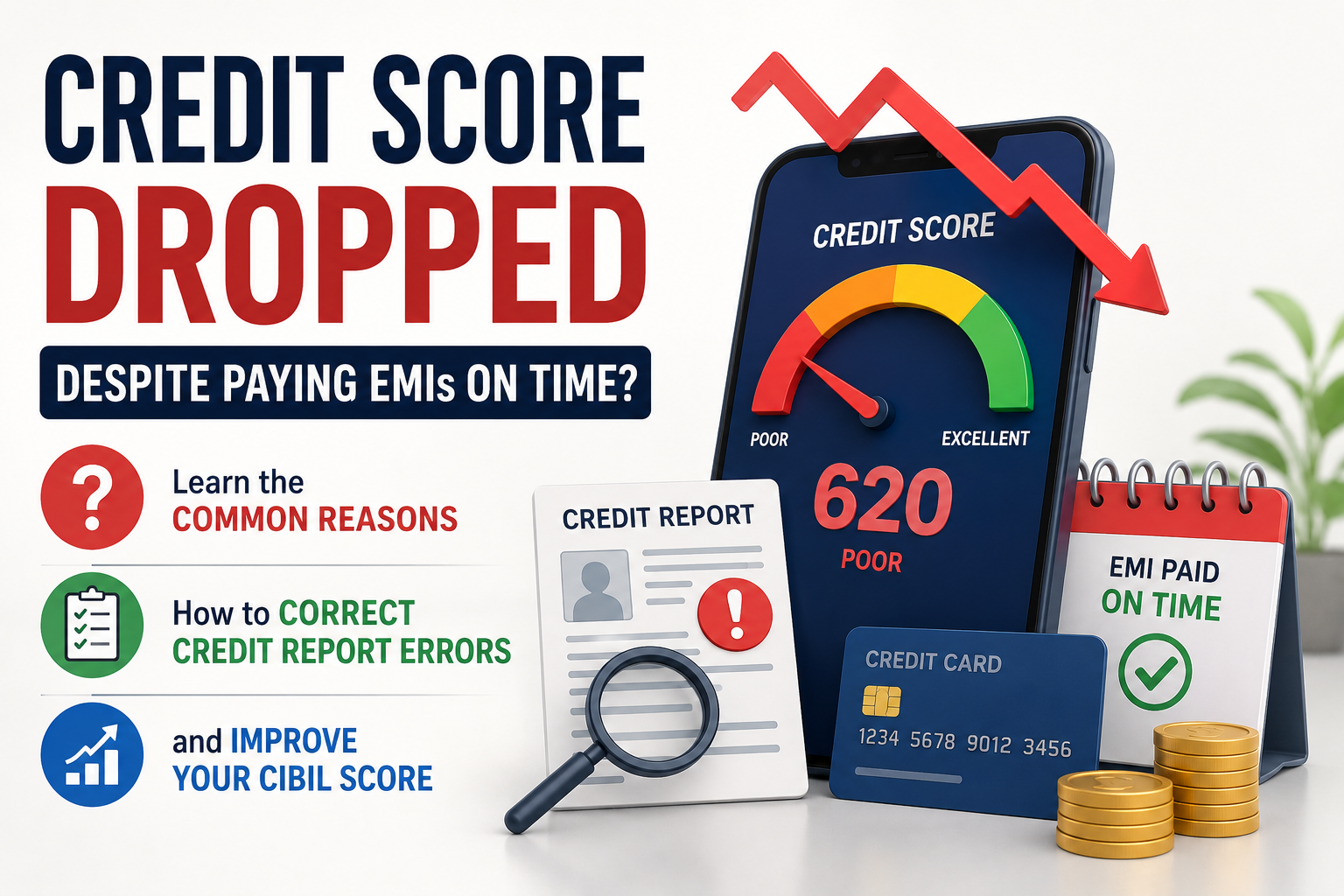
Your credit score can decline even if you've paid all EMIs on time. Common reasons include a high credit utilization ratio, errors in your credit report, recently closed loan accounts, multiple loan applications, changes in your credit mix, or delayed reporting by lenders. The good news is that most reporting errors can be corrected by raising a dispute with the credit bureau or the lender.
Why did my credit score drop even though I paid on time?
Timely EMI payments are one of the biggest factors affecting your credit score, but they are not the only one. Your score may fall because of high credit card utilization, incorrect reporting by lenders, newly opened loan accounts, multiple credit enquiries, or outdated information in your credit report. Checking your credit report regularly and correcting inaccuracies can help restore your score.
Credit Score Dropped Despite Paying on Time?
Many borrowers are surprised when they check their credit score and notice a decline—even though they have never missed an EMI or credit card payment. While payment history plays a major role in calculating your credit score, credit bureaus also evaluate several other factors before assigning a score.
A temporary drop does not always indicate poor financial behavior. In many cases, the decline may be caused by changes in your credit usage, lender reporting delays, or even errors in your credit report.
Understanding the reason behind the drop is the first step toward improving your credit profile and maintaining healthy financial habits.
How Is a Credit Score Calculated?
Credit bureaus evaluate multiple factors before generating your credit score.
The key factors include:
- Payment history
- Credit utilization ratio
- Length of credit history
- Types of credit accounts
- Number of recent loan applications
- Outstanding loan balances
- Credit report accuracy
A change in any of these areas can influence your overall score.
Common Reasons Your Credit Score Dropped
1. High Credit Card Utilization
One of the most common reasons is using too much of your available credit limit.
For example:
- Credit Limit: ₹1,00,000
- Outstanding Balance: ₹75,000
Your utilization ratio becomes 75%, which is considered high.
Ideal Credit Utilization
- Below 30% is generally considered healthy.
- Lower utilization may positively support your credit profile.
2. Delay in Lender Reporting
Sometimes banks or NBFCs update repayment information after a delay.
As a result:
- Your payment may not immediately reflect in your credit report.
- The score may recover automatically after the lender updates the records.
3. Errors in Your Credit Report
Incorrect information can reduce your credit score.
Common reporting errors include:
- Incorrect overdue amounts
- Closed loans showing as active
- Duplicate loan accounts
- Wrong personal details
- Incorrect payment history
- Loans that do not belong to you
These errors should be disputed as soon as possible.
4. Multiple Loan Applications
Every time you apply for a new loan or credit card, the lender may perform a hard enquiry.
Too many applications within a short period can temporarily reduce your credit score.
5. Recently Closed Loan
Closing a loan is generally positive, but in some cases your score may temporarily decrease if:
- Your credit mix changes.
- Your oldest active account is closed.
- Your overall credit history becomes shorter.
The impact is often temporary.
6. Changes in Credit Mix
Credit bureaus prefer borrowers with a healthy mix of:
- Home Loans
- Auto Loans
- Personal Loans
- Credit Cards
Having only unsecured loans may affect your overall credit profile.
How to Check If Your Credit Report Contains Errors
Review your credit report carefully and verify:
- Name and PAN details
- Address
- Active loans
- Closed loans
- EMI payment history
- Credit card balances
- Outstanding amounts
- Loan status
- Recent enquiries
Any incorrect information should be reported immediately.
Step-by-Step Guide to Correct Your Credit Score
Step 1: Download Your Credit Report
Obtain your latest report from the credit bureau or your lending institution.
Step 2: Identify Errors
Check every loan account and payment record carefully.
Step 3: Raise a Dispute
If you find incorrect information:
- Contact the credit bureau.
- Notify the concerned bank or NBFC.
- Submit supporting documents if required.
Step 4: Follow Up
Credit bureaus typically verify the information with the lender before updating your report.
Step 5: Monitor Your Score
After corrections are completed, regularly monitor your credit score to ensure the updates are reflected accurately.
Pros & Cons of Regular Credit Score Monitoring
Pros
- Helps detect errors in your credit report early.
- Improves your chances of getting loan approvals.
- Enables better financial planning.
- Helps identify fraudulent loan accounts or unauthorized enquiries.
- Encourages responsible borrowing habits.
- Can help you qualify for lower interest rates.
- Improves overall financial health over time.
Cons
- Checking your report too frequently may create unnecessary anxiety (though checking your own score does not lower it).
- Score fluctuations can be confusing if you don't understand the factors behind them.
- Some premium credit monitoring services may charge subscription fees.
- Correcting reporting errors can take time, depending on the lender and credit bureau.
10 Proven Tips to Improve Your Credit Score
1. Always Pay EMIs and Credit Card Bills on Time
Your payment history is one of the most important factors affecting your credit score.
2. Keep Credit Utilization Below 30%
Try not to use more than 30% of your total credit card limit.
Example:
- Credit Limit: ₹2,00,000
- Ideal Usage: Less than ₹60,000
3. Avoid Multiple Loan Applications
Applying for several loans or credit cards within a short period may result in multiple hard enquiries, which can temporarily reduce your score.
4. Check Your Credit Report Regularly
Review your report periodically to identify incorrect information, duplicate accounts, or outdated records.
5. Maintain a Healthy Credit Mix
A balanced combination of secured loans (such as home or vehicle loans) and unsecured credit (such as personal loans or credit cards) can strengthen your credit profile.
6. Avoid Closing Old Credit Cards Unnecessarily
Older credit accounts contribute to the length of your credit history. Closing your oldest card may affect your score in some cases.
7. Clear Outstanding Dues Promptly
Pay overdue balances as soon as possible and avoid carrying high outstanding amounts for extended periods.
8. Keep Existing Accounts Active
Using credit responsibly over time demonstrates consistent financial behavior.
9. Verify Loan Closure Updates
After repaying a loan, confirm that the lender has reported the account as "Closed" in your credit report.
10. Dispute Incorrect Information Immediately
If you notice incorrect loan details, payment history, or personal information, contact the credit bureau and the lender to request corrections.
How Your Credit Score Affects Loan Approval
A strong credit score can improve your financial opportunities.
Benefits of a Good Credit Score
- Faster loan approvals
- Higher chances of approval
- Lower interest rates (depending on lender policies)
- Higher credit card limits
- Better loan offers
- Easier access to premium financial products
Challenges of a Low Credit Score
- Higher borrowing costs
- Reduced loan eligibility
- Lower approved loan amounts
- More documentation requirements
- Increased chances of loan rejection
Frequently Asked Questions (FAQs)
1. Can my credit score drop even if I paid my EMIs on time?
Yes. High credit utilization, multiple loan enquiries, reporting delays, or errors in your credit report can also affect your score.
2. Does checking my own credit score reduce it?
No. Checking your own credit report is considered a soft enquiry and does not affect your credit score.
3. What is a good credit score in India?
Many lenders generally consider a score of 750 or above to be favorable, though eligibility criteria vary by lender.
4. How long does it take to correct a credit report error?
The timeline varies depending on the credit bureau and lender. Once verified, the correction is typically reflected after the dispute is resolved.
5. What is credit utilization?
Credit utilization is the percentage of your available credit limit that you are currently using.
6. Why do hard enquiries affect my score?
Several hard enquiries in a short period may indicate higher borrowing risk and can temporarily reduce your score.
7. Should I close unused credit cards?
Not always. Older accounts can contribute positively to your credit history, provided they are managed responsibly.
8. How often should I check my credit report?
Reviewing your report a few times a year or before applying for a major loan can help identify errors and monitor your credit profile.
9. Can errors in my report affect loan approval?
Yes. Incorrect information may reduce your score and influence lending decisions if not corrected.
10. How can I raise a dispute?
You can raise a dispute with the relevant credit bureau or contact the lender that reported the incorrect information.
11. Does repaying a loan immediately improve my score?
Repayment can have a positive impact over time, but the score may not increase instantly because updates depend on the lender's reporting cycle.
12. Does a personal loan affect my credit score?
Yes. Responsible repayment can strengthen your credit history, while missed payments can negatively impact your score.
13. Can a low credit score be improved?
Yes. Consistent on-time payments, low credit utilization, and correcting report errors can gradually improve your score.
14. How important is payment history?
Payment history is one of the most influential factors in most credit scoring models.
15. What is the best way to maintain a healthy credit score?
Pay all dues on time, keep credit utilization low, avoid unnecessary loan applications, and monitor your credit report regularly.
Conclusion
A drop in your credit score despite making timely payments can be frustrating, but it does not always indicate poor financial behavior. Factors such as high credit utilization, lender reporting delays, changes in your credit profile, or errors in your credit report may all contribute to temporary declines.
By reviewing your credit report regularly, correcting inaccuracies, using credit responsibly, and maintaining consistent repayment habits, you can strengthen your credit profile over time and improve your chances of securing loans and credit cards on favorable terms.
Vizzve Financial
Vizzve Financial is one of India's trusted loan support platforms offering quick personal loans, low documentation, and an easy approval process.
Whether you need funds for medical emergencies, education, business expansion, home renovation, or personal expenses, Vizzve Financial provides a fast, secure, and hassle-free borrowing experience.
Apply today at: www.vizzve.com
Published on : 14th July
Published by : SMITA
www.vizzve.com || www.vizzveservices.com
Follow us on social media: Facebook || Linkedin || Instagram
🛡 Powered by Vizzve Financial
RBI-Registered Loan Partner | 10 Lakh+ Customers | ₹600 Cr+ Disbursed