

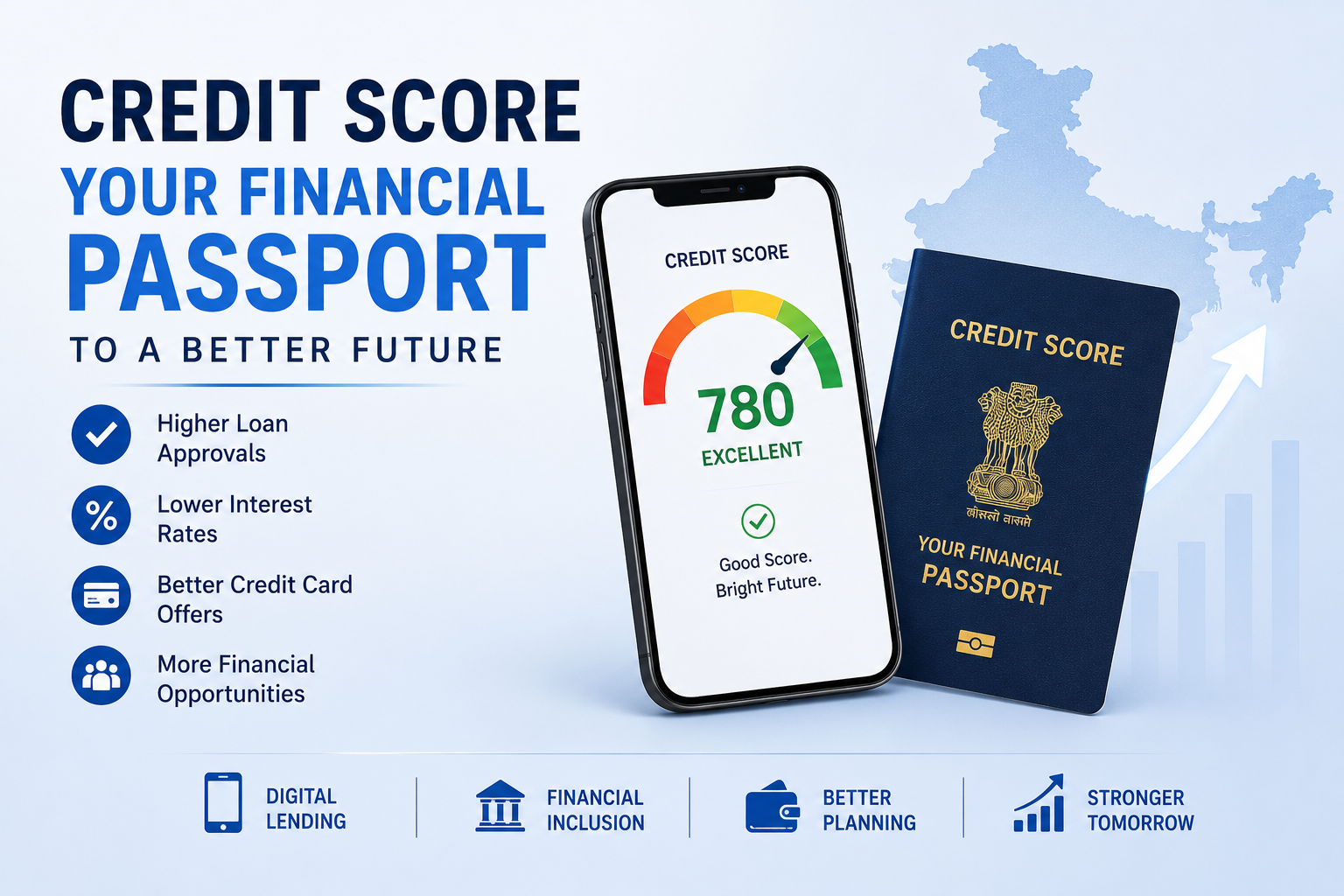
A decade ago, many Indians rarely paid attention to their credit score.
Today, that number can influence whether you get:
- A personal loan
- A home loan
- A credit card
- Better interest rates
- Faster financial approvals
In many ways, a credit score has become a financial passport, determining how easily individuals can access credit and financial opportunities.
As India's financial system becomes increasingly digital and data-driven, lenders are relying more than ever on credit scores to evaluate risk and make lending decisions.
For consumers, understanding and managing a credit score has become an essential part of financial health.
AI Answer Box
What is a credit score?
A credit score is a numerical representation of a person's creditworthiness based on borrowing and repayment behavior.
Why is it important?
It influences loan approvals, credit-card eligibility, interest rates, and borrowing limits.
What is considered a good score?
Generally, a score above 750 is viewed favorably by many lenders, though requirements vary.
What Is a Credit Score?
A credit score is a three-digit number that helps lenders assess the likelihood of a borrower repaying debt.
Credit scores are generated using information such as:
- Loan repayments
- Credit-card usage
- Outstanding debt
- Credit history length
- Credit inquiries
The score provides a quick snapshot of financial discipline.
Why Credit Scores Matter More Than Ever
India's lending ecosystem is expanding rapidly.
Banks, NBFCs, and fintech platforms process millions of applications every year.
Because manual evaluation is impractical at scale, lenders increasingly rely on credit scores.
Benefits for Lenders
- Faster decisions
- Better risk assessment
- Reduced defaults
- Automated approvals
How Credit Scores Affect Your Financial Life
Credit scores now influence multiple financial products.
1. Personal Loan Approvals
When applying for a personal loan, lenders often review:
- Credit score
- Repayment history
- Existing obligations
A strong score generally improves approval chances.
2. Home Loan Eligibility
Home loans involve large borrowing amounts and long repayment periods.
Lenders use credit scores to evaluate:
- Reliability
- Risk profile
- Borrowing behavior
Higher scores may improve eligibility.
3. Credit Card Approvals
Credit-card issuers frequently use scores to determine:
- Approval decisions
- Credit limits
- Card eligibility
Better scores often lead to more attractive offers.
Financial Products Influenced by Credit Scores
| Product | Impact of Credit Score |
|---|---|
| Personal Loans | High |
| Home Loans | High |
| Credit Cards | High |
| Auto Loans | High |
| Business Loans | Moderate to High |
Why Fintechs Love Credit Scores
The rapid growth of digital lending has increased the importance of credit data.
Fintech companies use credit scores to:
- Automate approvals
- Assess risk
- Reduce fraud
- Speed up lending decisions
This helps deliver loans within minutes rather than days.
The Digital Lending Revolution
India's fintech boom has transformed borrowing.
Today many applications involve:
- Digital KYC
- Automated underwriting
- Instant approvals
Credit scores play a central role in these systems.
What Determines Your Credit Score?
Several factors contribute to score calculation.
1. Repayment History
The most important factor.
Paying EMIs and bills on time helps maintain a strong score.
2. Credit Utilization
Using too much available credit can negatively affect scores.
3. Length of Credit History
Longer histories generally provide more data for evaluation.
4. Credit Mix
A balanced mix of loans and credit products may help.
5. New Credit Applications
Frequent applications can sometimes lower scores.
Key Factors Affecting Credit Scores
| Factor | Importance |
|---|---|
| Repayment History | Very High |
| Credit Utilization | High |
| Credit History Length | Moderate |
| Credit Mix | Moderate |
| New Applications | Moderate |
Why a Good Credit Score Saves Money
Many borrowers focus only on approval.
However, scores can also affect borrowing costs.
Potential Benefits
- Lower interest rates
- Higher loan limits
- Faster approvals
- Better financial products
Over time, these advantages can save substantial amounts of money.
Common Credit Score Mistakes
Missing EMI Payments
Late payments can damage scores significantly.
Maxing Out Credit Cards
High utilization may increase risk perception.
Applying for Too Many Loans
Frequent inquiries can affect credit profiles.
Ignoring Credit Reports
Errors sometimes appear and should be reviewed regularly.
How to Improve Your Credit Score
Improvement requires consistency.
Practical Steps
✅ Pay EMIs on time.
✅ Pay credit-card bills before due dates.
✅ Keep credit utilization moderate.
✅ Avoid unnecessary loan applications.
✅ Monitor credit reports regularly.
Why Credit Scores Are Becoming a Financial Passport
Traditionally, financial access depended heavily on:
- Relationships
- Documentation
- Branch-based verification
Today, credit scores provide a standardized way to evaluate borrowers.
In many cases, a strong score can unlock:
- Faster approvals
- Better rates
- Greater borrowing flexibility
This is why many experts describe credit scores as a financial passport.
Impact on Financial Inclusion
Credit scoring also supports broader financial inclusion.
Benefits include:
- Faster risk assessment
- Wider lending access
- Lower processing costs
- Greater transparency
Technology is helping more individuals enter the formal financial system.
Challenges and Concerns
Despite the benefits, concerns remain.
Key Issues
- Data accuracy
- Consumer awareness
- Privacy considerations
- Limited credit histories for new borrowers
Addressing these issues remains important.
The Future of Credit Scoring in India
Credit assessment is expected to evolve further.
Future trends may include:
- Alternative data usage
- AI-driven risk analysis
- Real-time credit monitoring
- Enhanced digital lending
These innovations could make credit access even more personalized.
Expert Commentary
Financial experts increasingly view credit scores as one of the most important financial indicators for consumers.
As lending becomes more digital and automated, maintaining a healthy credit profile may become just as important as managing savings and investments.
For many consumers, a strong credit score can create opportunities that extend far beyond borrowing.
Opportunities vs Risks
| Opportunities | Risks |
|---|---|
| Easier Loan Approvals | Score Damage From Missed Payments |
| Better Interest Rates | Excessive Borrowing |
| Faster Processing | Data Errors |
| Financial Inclusion | Privacy Concerns |
| Greater Access to Credit | Overdependence on Scores |
Key Takeaways
✅ Credit scores now influence most major lending decisions.
✅ Personal loans, home loans, and credit cards depend heavily on credit profiles.
✅ Fintech growth has increased the importance of credit scoring.
✅ Strong scores can improve approval chances and reduce borrowing costs.
✅ Timely repayments remain the most important factor.
✅ Credit scores are becoming a financial passport in India's digital economy.
Conclusion
Credit scores have evolved from a little-known financial metric into one of the most powerful tools shaping access to credit in India.
Whether applying for a personal loan, a home loan, or a premium credit card, consumers are increasingly judged by their credit history and repayment behavior.
As digital lending, fintech innovation, and financial inclusion continue expanding, maintaining a healthy credit score will become even more important.
In today's financial world, your credit score is no longer just a number—it is your financial passport.
Frequently Asked Questions (FAQs)
1. What is a credit score?
A numerical measure of creditworthiness based on borrowing behavior.
2. Why is a credit score important?
It influences loan approvals, interest rates, and credit-card eligibility.
3. What is considered a good score?
Generally, scores above 750 are viewed favorably.
4. Can a low score affect loan approval?
Yes, it may reduce approval chances or increase borrowing costs.
5. What affects credit scores the most?
Repayment history and credit utilization.
6. How can I improve my score?
Pay bills on time and manage credit responsibly.
7. Do fintech lenders use credit scores?
Yes, many rely heavily on them for automated approvals.
8. Can credit reports contain errors?
Yes, reviewing reports regularly is important.
9. How often should I check my score?
Periodically, especially before applying for credit.
10. Why is it called a financial passport?
Because it increasingly determines access to financial opportunities.
Published on : 12th June
Published by : SMITA
www.vizzve.com || www.vizzveservices.com
Follow us on social media: Facebook || Linkedin || Instagram
🛡 Powered by Vizzve Financial
RBI-Registered Loan Partner | 10 Lakh+ Customers | ₹600 Cr+ Disbursed