

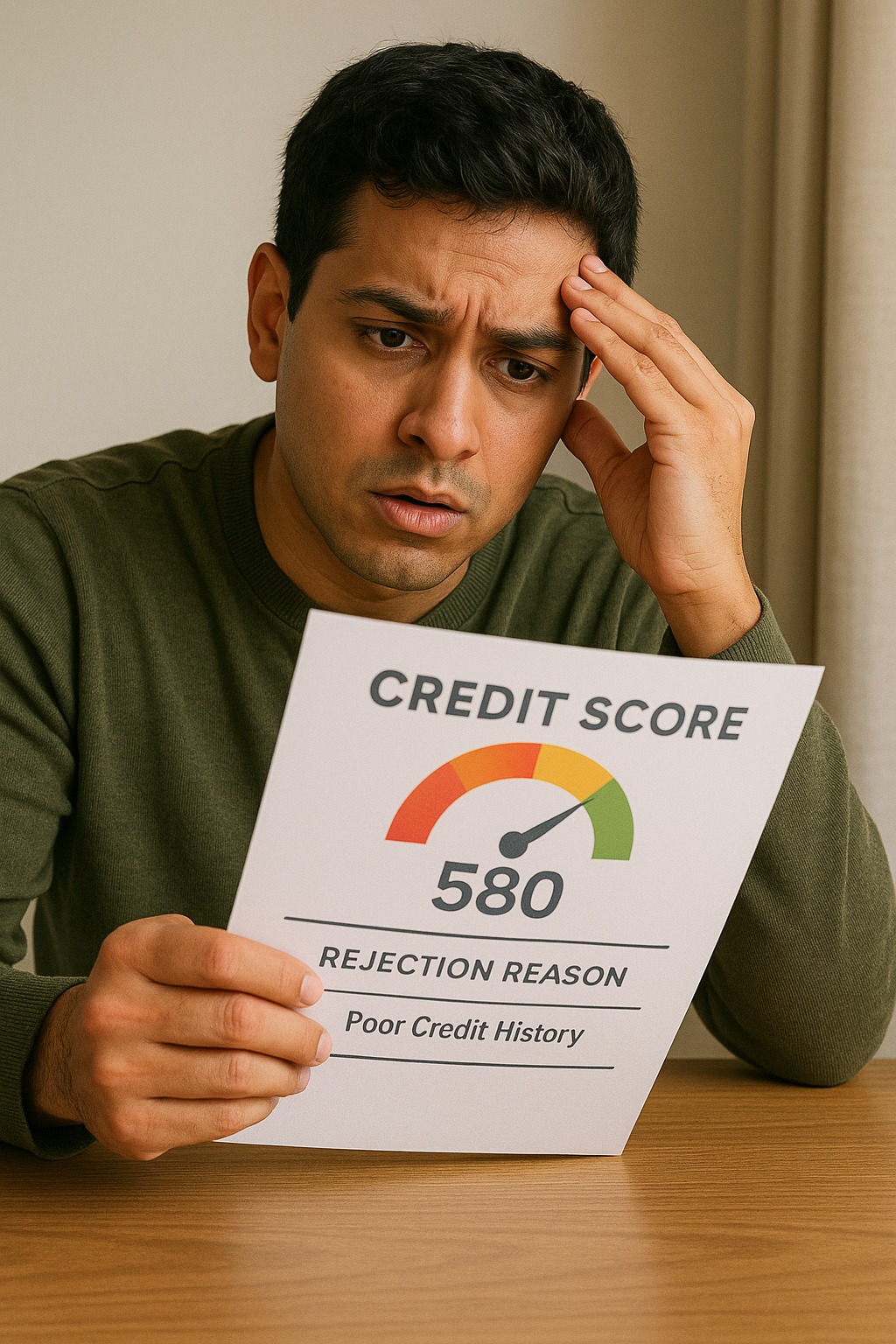
Applying for your first-ever loan — whether it’s a personal loan, two-wheeler loan or small credit line — can feel exciting.
But for many first-time applicants, the result is frustrating:
Loan rejected. No clear explanation. And no idea what went wrong.
Banks rarely reveal the real reasons behind loan rejections.
Here’s what actually happens behind the scenes and why your first loan often gets denied.
1. Your “Credit File” Is Too Thin
Banks trust borrowers who have a credit history.
If you’ve never taken a loan or used a credit card, your credit report is nearly empty.
This is called a Thin File, meaning:
No repayment track record
No proof of financial discipline
No data for the bank’s risk model
So even though you have no bad history, you also have no good history — which equals high risk.
2. No Recorded Credit Score Yet
Many first-time borrowers have a NA/NH (No History) CIBIL score.
Banks usually prefer applicants with 700+, especially for unsecured loans.
Low or missing credit score ≠ bad borrower.
But banks use algorithms → Missing data = decline.
3. Income Considered “Unstable” or “Insufficient”
Banks look at:
Job stability
Employer category
Salary pattern
Industry risk
Consistent monthly income
If you:
Recently changed jobs
Work on contract/freelancing
Have low salary credit
Have irregular income
…the system may reject your loan automatically.
4. High FOIR (Fixed Obligation to Income Ratio)
Even if you don’t have loans, your FOIR can be high due to:
Credit card bills
BNPL EMIs
Existing obligations under your name
Co-applicant loans in family
Banks generally want FOIR below 40–50%.
5. Errors in Your Documents (Common but Hidden Factor)
Many first-time rejections happen due to:
PAN–Aadhaar mismatch
Wrong birth date
Not updated mobile/email
Incorrect address
Mismatch in employer details
Old CIBIL data
Banks never tell the exact reason — they just reject silently.
6. Your Address May Be in a “High-Risk” Category
Banks internally mark some localities as:
High default zones
High fraud-risk zones
Low serviceability areas
Even if you are financially strong, your address may trigger a rejection.
7. Your Company Is Not on the Approved Employer List
Banks categorize employers into:
Category A (MNCs, Govt)
Category B (Reputed private)
Category C (Small firms, startups)
If your employer isn’t in their safe list, your loan may be declined.
8. Multiple Hard Enquiries Hurt Your First Loan Approval
If you apply to too many lenders within days, your CIBIL shows:
Multiple enquiries
High credit-hunger
Risky behaviour
Banks see this as a red flag and reject your loan.
9. Your Age or Profile Doesn’t Fit the Risk Model
You may be rejected if you’re:
Very young (18–21)
Newly employed
Self-employed without ITR
A student without income
Banks want stable, predictable borrowers.
How to Avoid Your First Loan Rejection
✔ Start with a credit card or small credit line
✔ Keep utilisation under 30%
✔ Pay all bills before due date
✔ Maintain job stability
✔ Apply with only one lender
✔ Build a minimum 6–12 months of credit history
✔ Fix errors in your CIBIL report
✔ Choose lenders offering first-time borrower products
Conclusion
Your first loan rejection is not a sign of failure — it’s usually a sign of missing data.
Banks don’t know you yet.
Build a clean credit footprint, start small, and lenders will trust you more.
Once your profile strengthens, approvals become faster, easier and cheaper.
FAQs
Q1. Why do first-time borrowers get rejected easily?
Because they have no repayment history, which banks consider risky.
Q2. Does not having a credit score mean rejection?
Not always, but many banks prefer applicants with a score.
Q3. How can I build credit if I’ve never borrowed?
Start with a credit card, secured credit card, or small EMI product.
Q4. Does checking my own CIBIL score hurt my credit?
No. Only lender enquiries affect your score.
Q5. Should I apply to many lenders to increase approval chances?
No. Multiple enquiries can lower approval chances.
Published on : 13th November
Published by : SMITA
www.vizzve.com || www.vizzveservices.com
Follow us on social media: Facebook || Linkedin || Instagram
🛡 Powered by Vizzve Financial
RBI-Registered Loan Partner | 10 Lakh+ Customers | ₹600 Cr+ Disbursed