

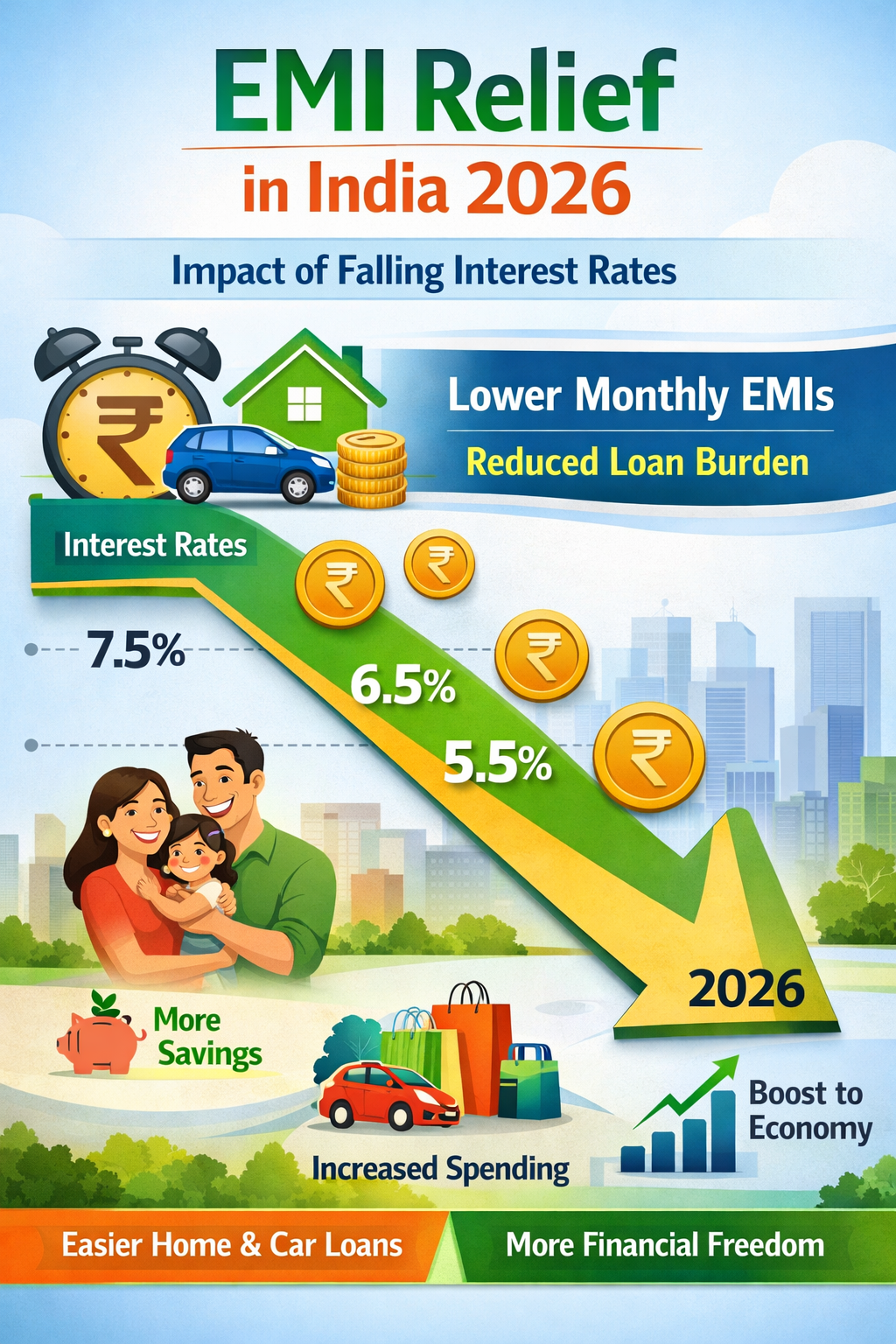
Interest rates in India may gradually fall in 2026 if inflation stays under control and economic growth slows slightly. However, large sudden cuts are unlikely — RBI is expected to move cautiously.
AI Answer Box
Interest rates could decline moderately in 2026 if inflation cools and economic stability improves. The Reserve Bank of India typically reduces rates to support growth when price pressure eases. Borrowers may see slower EMI reductions rather than sharp drops.
Who Decides Interest Rates in India?
India’s monetary policy is controlled by the Reserve Bank of India.
Globally, actions by the Federal Reserve also influence Indian markets and capital flows.
Their key goal → control inflation without slowing growth too much.
Why Interest Rates Rose in Previous Years
Rates increased mainly because of:
✔ High inflation
✔ Rising oil prices
✔ Global economic pressure
✔ Strong demand for credit
Central banks raised rates to cool down price growth.
What Could Push Rates Down in 2026?
Main triggers for rate cuts:
• Inflation falling within target range
• Slower economic growth
• Reduced global financial stress
• Stable commodity prices
• Lower food inflation
If these happen consistently — RBI may cut rates gradually.
🏛 How Central Bank Policy Impacts the Economy
Central banks balance:
📈 Growth needs
📉 Inflation control
💸 Loan affordability
📊 Currency stability
They rarely move too fast to avoid shocks.
Interest Rate Outlook for 2026 (Expected Range)
| Loan Type | 2025 Avg | 2026 Forecast |
|---|---|---|
| Home Loans | 8.5% – 9.5% | 7.8% – 8.8% |
| Personal Loans | 11% – 14% | 10% – 13% |
| Business Loans | 9% – 12% | 8.5% – 11% |
(Estimates depend on inflation trends)
How Rate Cuts Affect Common People
If rates fall:
✅ Lower EMIs
✅ Cheaper home loans
✅ Higher spending power
✅ Real estate boost
If rates stay high:
❌ Expensive borrowing
❌ Slower growth
❌ Higher EMI burden
Expert Insight
“2026 is likely to see a stabilization phase in interest rates. If inflation remains controlled, gradual rate reductions are possible — but not aggressive cuts.”
— Indian Monetary Policy Analyst
Historically, RBI prefers slow adjustments over sudden shifts.
Pros & Cons of Falling Interest Rates
👍 Benefits
• Cheaper loans
• Higher home buying
• Business expansion
• Economic growth
👎 Risks
• Higher inflation if overdone
• Asset bubbles
• Currency pressure
Summary Box
✔ Inflation decides rate cuts
✔ RBI moves slowly and cautiously
✔ 2026 may see moderate reduction
✔ EMIs may ease gradually
✔ Economy stays balanced
Key Takeaways
• Sharp rate cuts unlikely
• Gradual easing possible
• Inflation is key factor
• Borrowers may benefit slowly
• Long-term stability prioritized
❓FAQs
1. Will interest rates fall in India in 2026?
Possibly gradual cuts if inflation stays controlled.
2. Will home loan EMIs reduce in 2026?
Yes, if RBI lowers repo rate slowly.
3. Is RBI likely to cut rates sharply?
No, RBI prefers cautious moves.
4. What decides rate cuts most?
Inflation trends.
5. Do US rates affect India?
Yes, global capital flows matter.
6. Is 2026 good time to take loan?
If rates soften, borrowing becomes cheaper.
7. Can inflation return if rates fall too fast?
Yes — that’s why RBI is careful.
8. Should borrowers wait for rate cuts?
Gradual cuts mean waiting may not bring big savings.
9. Are fixed or floating rates better in 2026?
Floating may benefit from cuts.
10. Will savings interest drop too?
Usually yes when rates fall.
Conclusion
2026 may bring moderate interest rate relief — not dramatic drops.
Borrowers should plan smartly, focus on affordability, and avoid waiting endlessly for perfect timing.
Stable long-term financial planning always beats rate speculation.
Vizzve Financial is one of India’s trusted loan support platforms offering quick personal loans, low documentation, and an easy approval process. Apply at www.vizzve.com.
Published on : 21st February
Published by : SMITA
www.vizzve.com || www.vizzveservices.com
Follow us on social media: Facebook || Linkedin || Instagram
🛡 Powered by Vizzve Financial
RBI-Registered Loan Partner | 10 Lakh+ Customers | ₹600 Cr+ Disbursed