

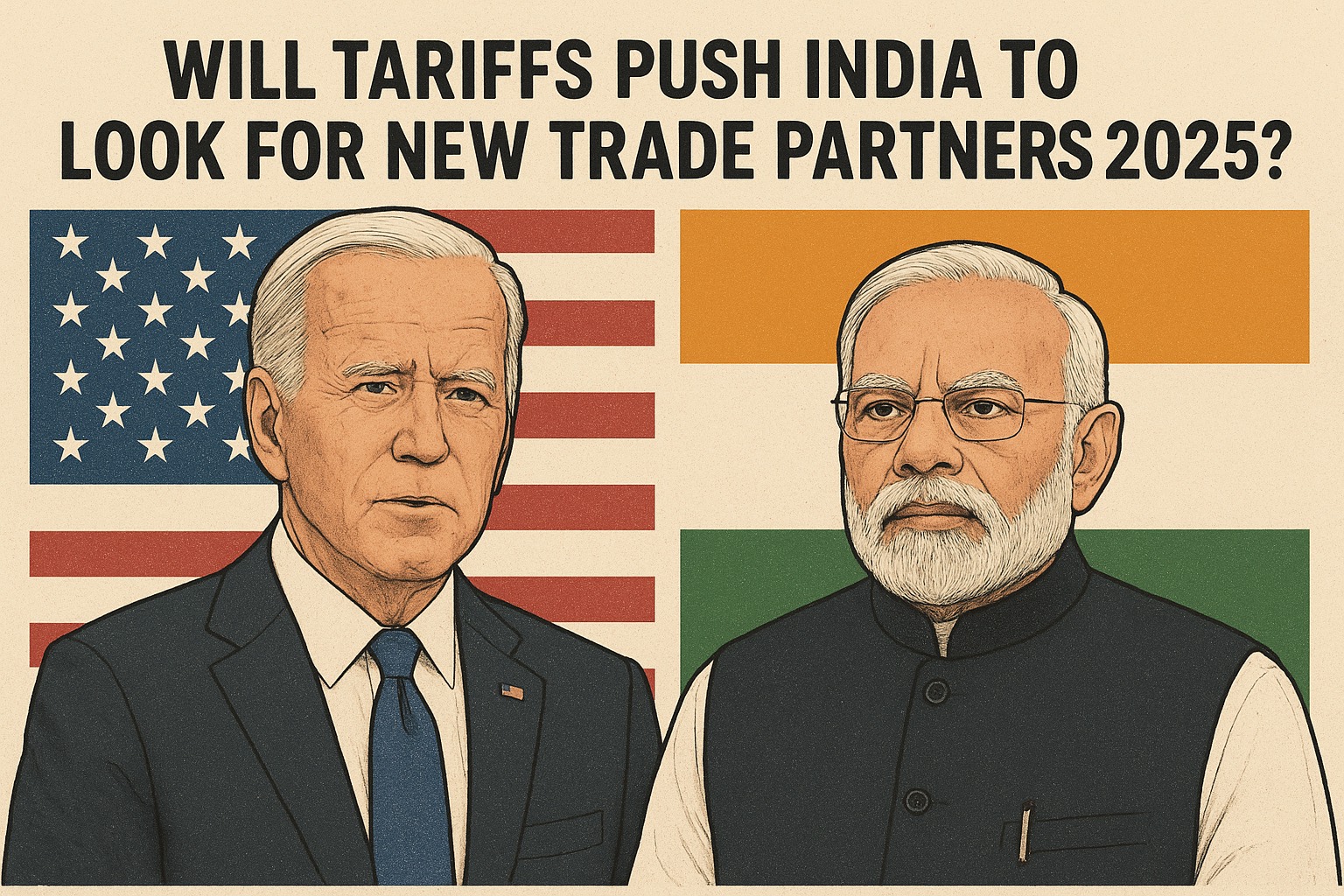
As global trade tensions escalate in 2025, Indian exporters are grappling with tariff hikes from major partners like the US. These developments raise a pressing question: Will tariffs push India to seek new trade alliances? With its export-driven growth strategy at stake, India is carefully evaluating how to safeguard its economy while exploring fresh opportunities in global markets.
India’s Tariff Challenge
Tariffs increase the cost of Indian goods abroad, making them less competitive in price-sensitive markets. Sectors such as textiles, gems, steel, and IT hardware are particularly vulnerable. The long-term risk lies in over-reliance on a few large markets like the US and EU.
Diversification of Trade Partners
To reduce dependency, India is exploring:
Strengthening Ties with ASEAN – Expanding partnerships with Vietnam, Thailand, and Indonesia to boost manufacturing and electronics trade.
Deepening Relations with the Middle East – Leveraging free trade agreements with the UAE and ongoing negotiations with the Gulf Cooperation Council (GCC).
Pivot to Africa – Africa’s emerging markets provide opportunities in agriculture, pharmaceuticals, and renewable energy.
Collaboration with Latin America – Countries like Brazil and Mexico are increasingly seen as alternative trade allies for food, energy, and tech products.
Policy Push from India
The Indian government is fast-tracking Free Trade Agreements (FTAs) with multiple regions, offering incentives for exporters to explore non-traditional markets, and investing in supply chain logistics to reduce costs. These steps aim to make Indian goods globally competitive despite tariffs.
Why New Trade Partners Matter
Resilience Against Shocks – Diversification reduces vulnerability to tariff-driven disruptions.
New Growth Engines – Emerging economies present fresh demand for Indian products.
Stronger Negotiating Power – By broadening its trade network, India gains leverage in future negotiations with major powers.
Conclusion
Tariffs may pose immediate challenges, but they also serve as a catalyst for India to reshape its trade strategy. By building stronger ties with ASEAN, the Middle East, Africa, and Latin America, India could transform short-term risks into long-term opportunities, reducing dependence on any single economy.
FAQs
Q1. Why is India looking for new trade partners in 2025?
Rising tariffs from traditional partners like the US are pushing India to diversify its export markets and reduce reliance on a few economies.
Q2. Which regions could become India’s new trade partners?
India is focusing on ASEAN nations, the Middle East, Africa, and Latin America for trade diversification.
Q3. How will new trade partners benefit India’s exporters?
They will create new markets for Indian goods, reduce tariff risks, and provide fresh growth opportunities in sectors like pharmaceuticals, agriculture, textiles, and renewable energy.
Q4. What role does the Indian government play in this shift?
The government is accelerating Free Trade Agreements, offering incentives, and improving supply chains to make exports more competitive globally.
Q5. Can India fully reduce dependence on the US and EU?
Not entirely in the short term, but diversification will strengthen India’s resilience and bargaining power in future trade negotiations.
Published on : 31st August
Published by : SMITA
www.vizzve.com || www.vizzveservices.com
Follow us on social media: Facebook || Linkedin || Instagram
🛡 Powered by Vizzve Financial
RBI-Registered Loan Partner | 10 Lakh+ Customers | ₹600 Cr+ Disbursed
https://play.google.com/store/apps/details?id=com.vizzve_micro_seva&pcampaignid=web_share