

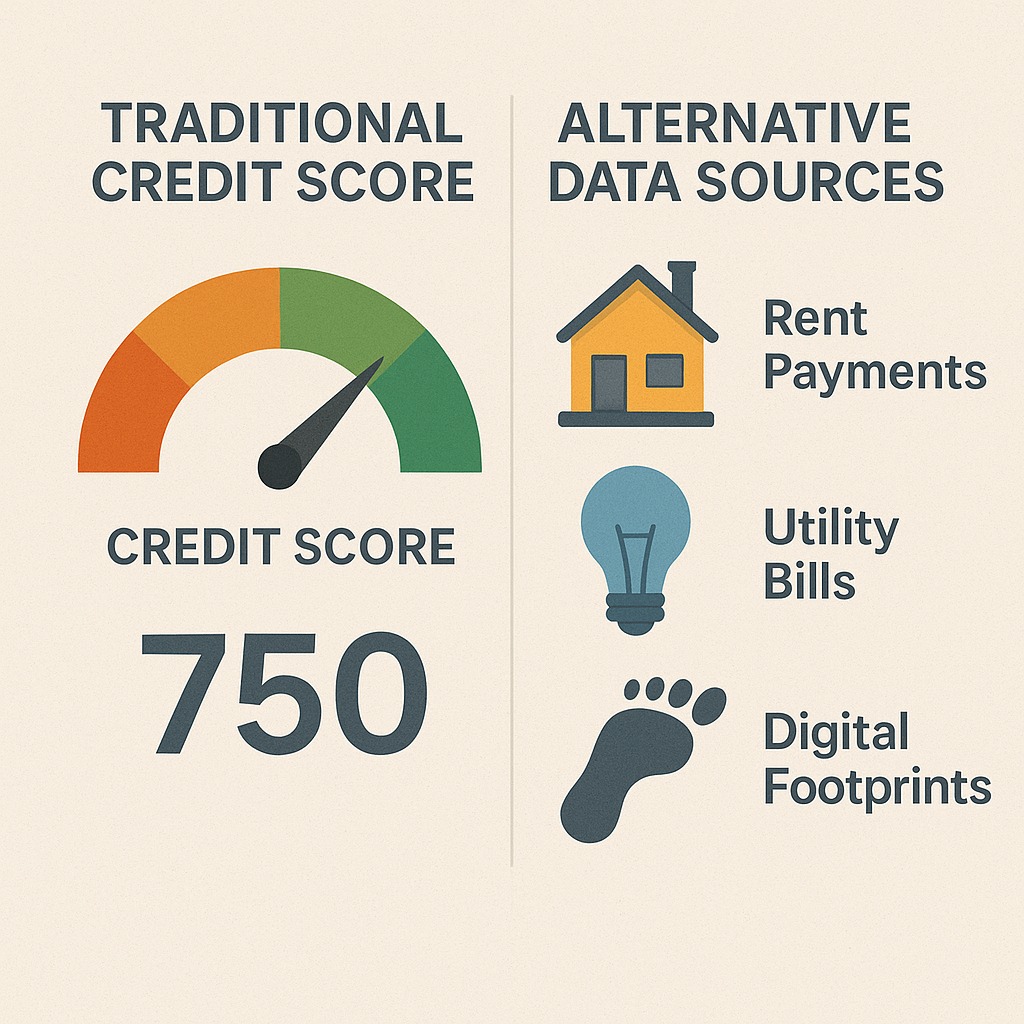
For decades, traditional credit scoring has been the core tool banks use to judge whether someone can repay a loan. Now, a new approach — alternative-data scoring — is gaining momentum. This method looks beyond past loans and credit cards, using day-to-day financial behaviour to evaluate creditworthiness.
The big question is: Will alternative-data scoring replace traditional credit scores?
Let’s break it down.
What Is Traditional Credit Scoring?
Traditional scores rely on:
Loan history
Credit card usage
Repayment record
Defaults or delays
Credit utilisation
Length of credit history
These scores are standardised, widely accepted, and trusted by lenders.
Strengths
Proven reliability
Simple to use
Consistent industry-wide
Weaknesses
Doesn’t work well for young or new borrowers
Excludes people without past loans
May not reflect current financial behaviour
What Is Alternative-Data Scoring?
Alternative-data scoring uses non-traditional indicators such as:
Rent payments
Utility bills
Mobile recharge/payment history
Bank account transaction trends
Digital spending patterns
Subscription payments
Employment stability
Even behavioural patterns from apps and online activity
It creates a more holistic and real-time view of a person’s financial reliability.
Benefits
Helps people with “thin” or no credit files
Reflects current financial habits
Can improve credit access for millions
Challenges
Needs strong privacy protection
Not yet fully standardised
Risk of misinterpreting behavioural patterns
Will Alternative Data Replace Traditional Credit Scores?
Why It Could Happen:
Lenders want deeper, real-time insights
Millions lack traditional loan history
Technology makes data analysis easier
Governments push for financial inclusion
Why It Won’t Fully Replace Them Soon:
Traditional scores are legally embedded in loan processes
Alternative data needs regulatory clarity
Accuracy varies across data sources
Privacy and consent concerns
Most Likely Outcome:
A hybrid model — lenders will use traditional credit scores + alternative data together for better risk assessment.
Who Benefits the Most From Alternative-Data Scoring?
Young professionals without loan history
First-time borrowers
Gig-economy workers
People with informal income
Individuals who pay rent and bills on time
Digital-savvy users with stable transaction patterns
It bridges the gap for people who behave financially well but have no credit record.
What Should Borrowers Do Now?
Even before alternative scoring becomes mainstream, you can prepare:
✔ Maintain timely rent and utility payments
✔ Keep bank transactions clean
✔ Avoid frequent overdrafts or bounced payments
✔ Pay BNPL (“Buy Now Pay Later”) dues on time
✔ Keep digital financial behaviour consistent
These signals can help future scoring models favour you.
Future Outlook
Credit scoring systems around the world are moving toward:
More data points
More real-time financial analysis
More inclusive scoring for underserved borrowers
More AI-driven evaluations
But traditional credit scores will remain important — especially for home loans, auto loans, and regulated lending products.
Alternative data will enhance, not immediately replace, traditional credit scores.
FAQs
1. Will traditional credit scores disappear?
No. They will remain important but will be complemented by alternative-data scoring.
2. Who benefits most from alternative scoring?
New borrowers with little or no credit history.
3. Is alternative data safe and private?
It depends on regulation and consent. Strong data protection rules are needed.
4. Can alternative scoring improve loan approval chances?
Yes, especially for borrowers with strong digital and bill-payment discipline.
5. Which loans will use alternative scoring first?
Small-ticket loans, online credit, fintech lending, and BNPL.
Published on : 19th November
Published by : SMITA
www.vizzve.com || www.vizzveservices.com
Follow us on social media: Facebook || Linkedin || Instagram
🛡 Powered by Vizzve Financial
RBI-Registered Loan Partner | 10 Lakh+ Customers | ₹600 Cr+ Disbursed