

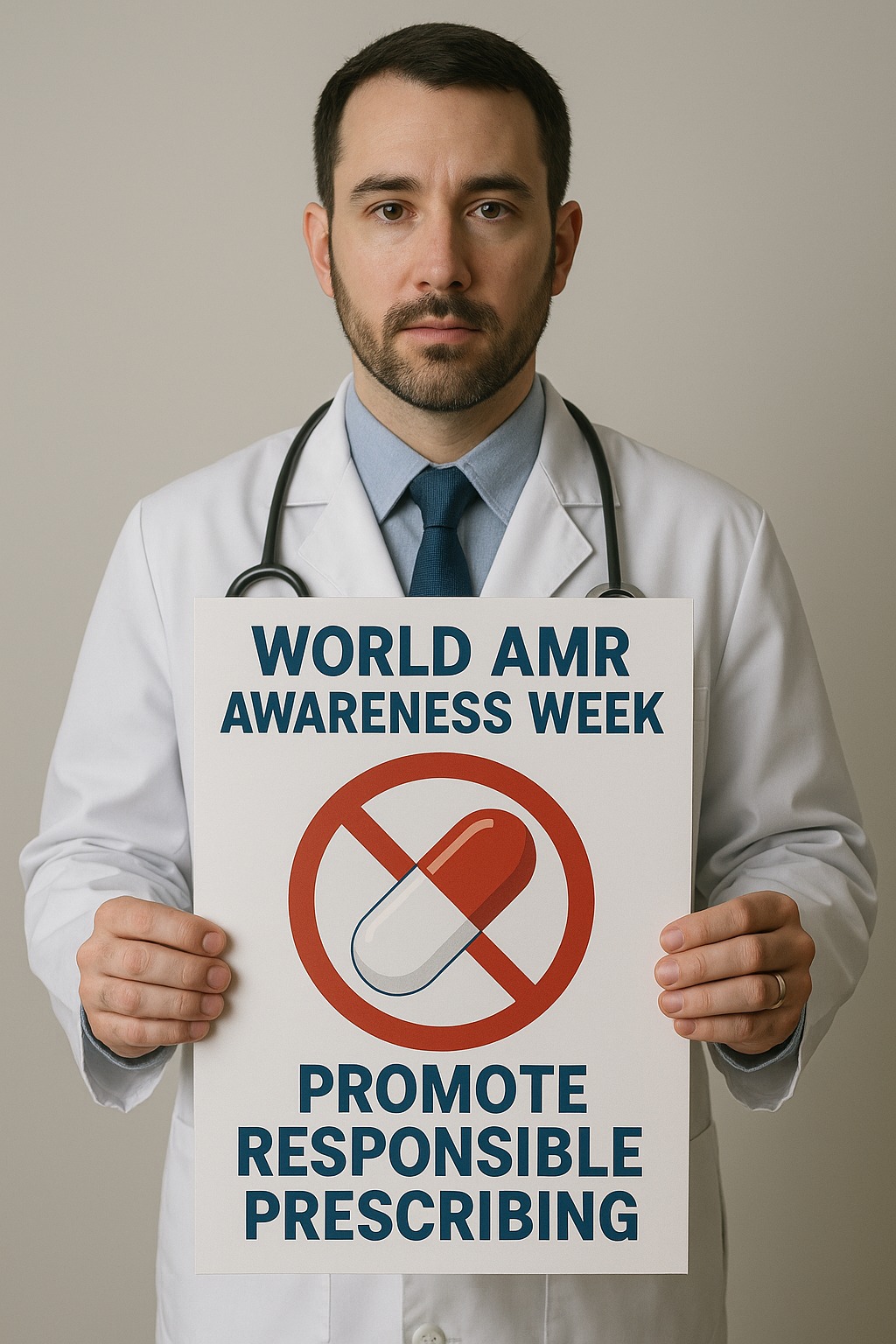
Every year, World Antimicrobial Resistance (AMR) Awareness Week serves as a global reminder that antibiotics are not unlimited miracle drugs — they are powerful, life-saving medicines that must be used with care, strategy, and accountability. As AMR continues to rise worldwide, doctors and health professionals emphasize the need for responsible prescribing, ensuring antibiotics remain effective for current and future generations.
According to medical experts, antibiotics are meant only for bacterial infections and should never be taken casually, demanded by patients, or prescribed without proper evaluation. Misuse, overuse, and self-medication significantly accelerate resistance, making common infections harder to treat, increasing medical costs, raising hospitalisation risks, and reducing treatment options.
During this year’s awareness drive, doctors reiterate that every prescription counts, and even small, everyday decisions can make a crucial difference.
Why Responsible Prescribing Matters
🔹 Prevents bacteria from evolving into drug-resistant strains
🔹 Ensures correct dosage, duration, and type of antibiotic
🔹 Reduces recurrence and complications related to misuse
🔹 Helps maintain global and community-level disease control
🔹 Protects the purpose and effectiveness of last-line antibiotics
Doctor’s Key Message: “Use Antibiotics Only When Truly Needed”
Medical experts underline that antibiotics are not meant for viral illnesses such as seasonal cold, flu, most sore throats, or mild fever. Prescriptions should be based on clinical assessment, diagnostic clarity, and evidence-based practice, not assumptions or social pressure.
For doctors, careful prescribing is both a duty and a responsibility, involving:
Choosing narrow-spectrum antibiotics when possible
Avoiding unnecessary repeat courses
Encouraging lab testing when required
Educating patients on correct usage and completion of course
Reviewing response before escalating medication
AMR Is a Shared Responsibility
While doctors lead prescribing protocols, patients, pharmacists, families, and communities also play an important role. Responsible medicine use involves not self-medicating, not sharing antibiotics, not storing leftover medicines, and not stopping mid-course when symptoms improve.
AMR can affect anyone, at any age, anywhere, making awareness an essential public health priority.
❓ Frequently Asked Questions (FAQ)
Q1: What is AMR?
AMR (Antimicrobial Resistance) occurs when microorganisms become resistant to medicines designed to kill them, making treatments less effective.
Q2: What causes antibiotic resistance?
Misuse, overuse, incomplete dosage, self-medication, and unnecessary prescriptions are major contributors.
Q3: Can antibiotics treat cold, flu, or viral fever?
No — antibiotics work only on bacterial infections, not viral illnesses.
Q4: Why should we not stop antibiotics early if we feel better?
Stopping early may allow surviving bacteria to grow stronger and resistant.
Q5: Who is responsible for preventing AMR?
Doctors, patients, healthcare workers, caregivers, and society — it is a shared duty.
Published on : 18th November
Published by : SMITA
www.vizzve.com || www.vizzveservices.com
Follow us on social media: Facebook || Linkedin || Instagram
🛡 Powered by Vizzve Financial
RBI-Registered Loan Partner | 10 Lakh+ Customers | ₹600 Cr+ Disbursed
SOURCE CREDIT :Written by: Shreya Goswami