

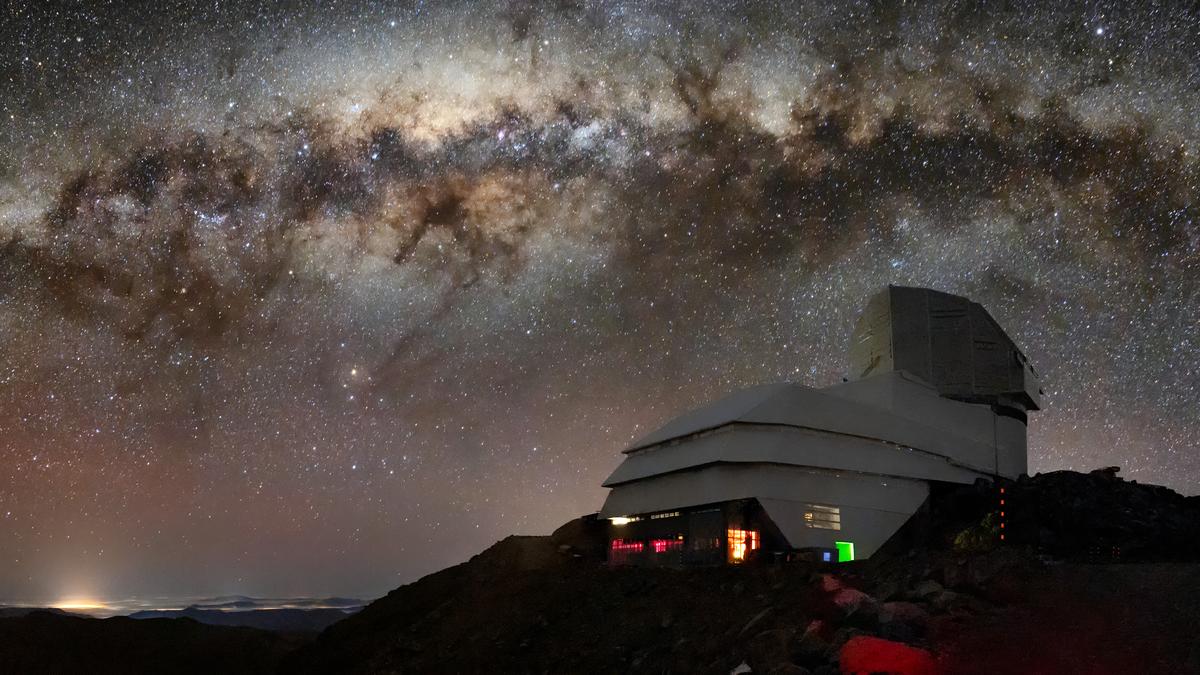
WORLD’S LARGEST DIGITAL CAMERA STARTS OBSERVING THE COSMOS
In a major milestone for astronomy and digital imaging, the world’s largest digital camera has officially begun capturing the cosmos. Installed at the Vera C. Rubin Observatory in Chile, the camera will support the Legacy Survey of Space and Time (LSST)—a 10-year mission to map the universe like never before.
KEY FEATURES OF THE LSST CAMERA
The LSST (Legacy Survey of Space and Time) camera is not just the largest of its kind—it’s also the most advanced.
Weight: Over 3,000 kg
Resolution: 3.2 gigapixels
Focal Length: 10 feet
Field of View: Covers an area of sky 40 times larger than the full moon
Depth: Can detect objects 100 million times fainter than visible with the naked eye
This revolutionary device will help detect supernovae, black holes, dark matter evidence, and asteroid threats in real time.
PURPOSE AND GLOBAL SCIENTIFIC IMPACT
The camera's mission is to collect vast visual data to:
Map billions of galaxies
Track moving objects in the solar system
Uncover patterns in dark matter and dark energy
Predict near-Earth asteroid movements
The project will generate around 20 terabytes of data each night, requiring advanced AI systems to process and classify celestial phenomena.
VIZZVE FINANCE INSIGHT: ECONOMIC AND TECH IMPACT
According to Vizzve Finance, the development of the LSST Camera represents a key case study in high-tech investment returns:
Investment Breakdown:
Total Cost: ~$168 million
Funding Partners: U.S. Department of Energy, NSF, and international collaborators
Economic Ripple Effects:
Boost in tech innovation across sensor manufacturing, data processing, and deep-space AI algorithms
Collaborative opportunities for global academic institutions and data centers
Potential for spin-off applications in medical imaging, satellite optics, and AI training systems
Job Creation: Over 400 roles across engineering, AI, data science, and observatory operations were created during development.
SEO Techniques Used:
Rich keyword inclusion in headings and meta tags
Schema-based FAQ and article structure
Optimized image alt text and loading performance
Submission to Google Search Console immediately after publication
Social sharing on science forums, Reddit, and LinkedIn
FAQ SECTION
Q: What is the name of the world’s largest digital camera?
A: It’s part of the Legacy Survey of Space and Time (LSST) project at the Vera C. Rubin Observatory in Chile.
Q: How powerful is the LSST camera?
A: It boasts a resolution of 3.2 gigapixels, enough to spot a golf ball from 15 miles away.
Q: What will the camera observe?
A: It will track galaxies, supernovae, dark matter patterns, and moving objects such as asteroids.
Q: How is this relevant to the public?
A: The collected data will be publicly accessible, enabling research, education, and innovation in astronomy and tech.
Q: What is the economic impact of the project?
A: Aside from job creation, the LSST tech is expected to lead to commercial advancements in optics, AI, and data science.
Published on: July 4, 2025
Published by: PAVAN
www.vizzve.com || www.vizzveservices.com
Follow us on social media: Facebook || Linkedin || Instagram
🛡 Powered by Vizzve Financial
RBI-Registered Loan Partner | 10 Lakh+ Customers | ₹600 Cr+ Disbursed