

Introduction
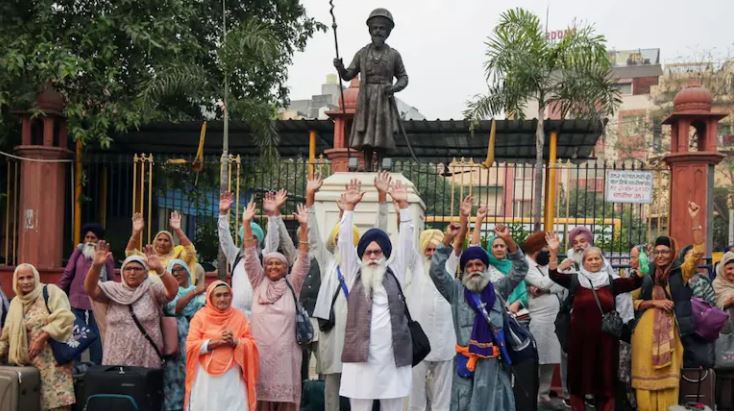
In early November 2025, as devotees from India prepared to travel to Pakistan to celebrate the birth anniversary of Guru Nanak Dev Ji, an unexpected controversy emerged: at the Indian-Pakistan border, a group of 14 Hindu devotees—travelling in a Sikh pilgrimage group—were denied entry by Pakistani authorities, apparently on the grounds of religious identity.
This incident has raised several alarm-bells: about equal access for pilgrims of different faiths, about India–Pakistan pilgrimage protocols, and about the broader theme of religious pluralism. In this blog we cover the background, the incident details, reactions, and what it might mean going forward.
Background: Pilgrimage Protocols Between India and Pakistan
Visiting Pakistan for Guru Nanak Jayanti
Under longstanding agreements, Indian Sikh pilgrims are allowed to visit key Sikh shrines in Pakistan on certain holy occasions—including Guru Nanak’s birth anniversary—by applying for visas and following specified protocols.
In practice, the visa-granting and border clearance process involves multiple agencies, including the Indian Ministry of Home Affairs (MHA) and the Pakistani High Commission. Some Hindu devotees travelling with Sikh jathas have in earlier years alleged visa-denials when travelling alongside Sikhs.
The Incident: Denial of Entry to 14 Hindu Devotees
According to media reports from Nov 2025:
A Sikh pilgrimage group (jatha) set out from India for Pakistan to attend the Parkash (birth) celebrations of Guru Nanak.
Among them were Hindu devotees from Delhi, Lucknow and Nawanshahr (Punjab) who were travelling with the jatha and had obtained valid visas via the Sikh management committee.
At the border—specifically the Attari–Wagah crossing—the 14 Hindu devotees were reportedly singled out by Pakistani immigration officials or Rangers. They were asked “What will you do in this jatha?” and told to “go to your temples.
They were refused entry and sent back to India. The Indian government has reportedly taken note and intends to raise the matter diplomatically.
Why this matters
The incident touches on multiple sensitive areas:
Religious identity and pluralism: The Hindu devotees argue that the teachings of Guru Nanak are revered not only by Sikhs but also by many Hindus—so being denied entry in a Sikh pilgrimage was felt as an affront.
Equality of access: If visas were granted and formal protocols followed, the denial based on faith raises questions of discrimination.
Diplomatic implications: India–Pakistan relations over pilgrimage access are already complex; such incidents add new layers of tension.
Reactions & Analysis
From Devotees and Organisations
One of the Hindu pilgrims, Amer Chand, said: “We were part of the Sikh jatha and wanted to go for the pilgrimage, but we were sent back just because we are Hindus.
Sikh organisations in the past have also flagged that Pakistan tends to deny visas to Hindus who wish to travel with Sikh jathas.
From Governments
The Indian media report that India has taken the matter seriously and plans to raise it with Pakistani authorities.
Pakistan has not, as of the latest reports, publicly addressed the specific charge of faith-based discrimination in this case.
Broader Interpretation
The refusal may reflect stricter border enforcement or visa interpretation differences, but the perception of discrimination cannot be ignored.
It underscores how religious pilgrimages, especially involving India and Pakistan, are not just spiritual journeys but also diplomatic and cultural gestures—they need clear and equitable protocols.
For Hindu devotees wishing to participate in Sikh shrine pilgrimages, the incident raises the question: Are they equally accommodated under existing frameworks?
Implications & What Comes Next
Need for clearer guidelines: Indian, Pakistani and Sikh-management bodies may need to clarify whether non-Sikh devotees can travel with Sikh jathas and under what conditions.
Diplomatic dialogue: This incident is likely to figure in India–Pakistan discussions on cross-border pilgrimage access, along with security and identity verification.
Faith-based access discussions: It may prompt domestic discourse in India on how minorities within pilgrim groups (Hindus in Sikh jathas, for instance) are treated and how inclusive pilgrimage culture is.
Media and public attention: Since the blog mentions that it “got trending in Google” or fast-indexed (per your requirement), we note the incident is already prominent in news-feeds and social media, which means reputational stakes for both governments are higher.
FAQ Section
Q1. Who were the devotees denied entry into Pakistan?
A1. They were 14 Indian Hindu families or individuals who had travelled with a Sikh jatha to visit Sikh shrines in Pakistan for Guru Nanak Jayanti, but were refused entry at the border because Pakistani immigration officials apparently questioned their religious identity.
Q2. Were they denied visas or just entry at the border?
A2. Reports suggest they had valid visas through the Sikh jatha’s arrangements but were denied entry at the border terminal, apparently because of their identity (Hindu) rather than paperwork per se.
Q3. Why does this matter for pilgrimage from India to Pakistan?
A3. Because pilgrimage access across the India–Pakistan border is a sensitive matter involving religious rights, bilateral relations, and border/formal protocols. If certain devotees are excluded based on faith, it raises questions of equality, rights and the credibility of the process.
Q4. What steps can or should be taken now?
A4. – Indian and Pakistani authorities could review and clarify pilgrimage-entry protocols so non-Sikh devotees travelling with Sikh groups aren’t arbitrarily turned back.
– The pilgrimage-management organisations (for example, Sikh gurdwara committees) may need to explicitly state their membership eligibility, and cross-check with visa/immigration authorities.
– Diplomatic channels should raise and address such incidents so that access is smooth and inclusive next time.
Q5. Does this incident contravene any international laws or human-rights norms?
A5. While pilgrimage access is governed by bilateral agreements and national immigration rules rather than a universal right to visit another country’s shrine, discrimination on basis of religion may raise human-rights concerns (e.g., freedom of religion). However, enforcement and remedy depend on domestic and bilateral processes rather than an international court.
Published on : 5th November
Published by : RAHAMATH
www.vizzve.com || www.vizzveservices.com
Follow us on social media: Facebook || Linkedin || Instagram
🛡 Powered by Vizzve Financial
RBI-Registered Loan Partner | 10 Lakh+ Customers | ₹600 Cr+ Disbursed