

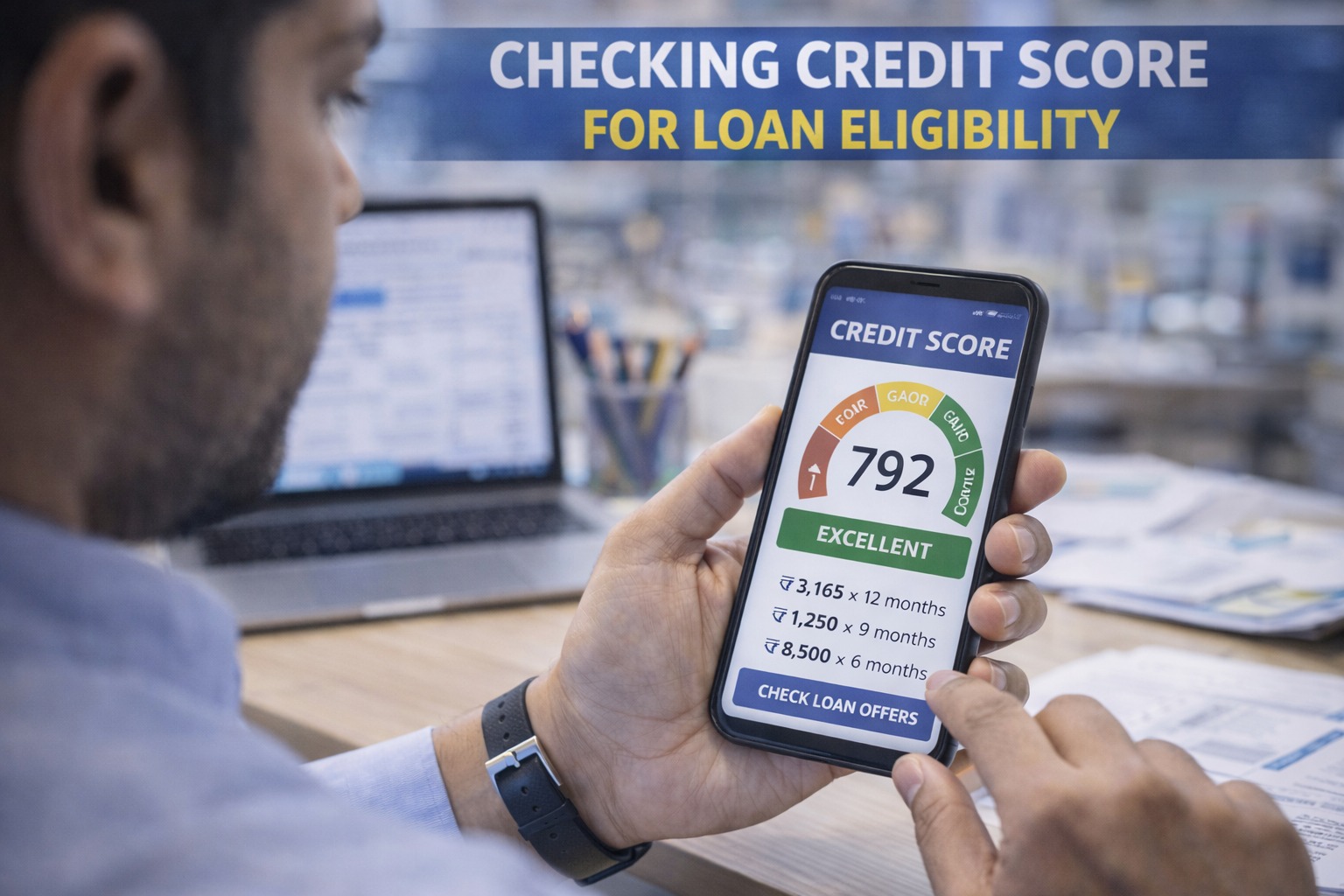
In India, your credit score directly affects loan approvals, interest rates, EMI access, credit card limits, and overall financial freedom in everyday life.
AI Answer Box (Search & AI Friendly)
A credit score is a three-digit number that shows how responsibly a person manages loans and payments. In India, it impacts daily financial life by deciding loan approvals, EMI eligibility, interest rates, and access to digital credit. A higher score means cheaper loans and faster approvals
Why Credit Score Now Controls Your Financial Life
India’s modern lending system — supervised by the Reserve Bank of India — relies heavily on digital credit profiling instead of paperwork.
Credit bureaus such as TransUnion CIBIL record your borrowing and repayment behaviour.
Your credit score influences:
Loan and EMI approvals
Interest rates you receive
Credit card limits
Instant digital loans
Long-term financial trust
What Different Credit Score Levels Mean
| Score Range | Status | Real-Life Impact |
|---|---|---|
| 750–900 | Excellent | Lowest interest, fast approvals |
| 650–749 | Good | Easy loans, normal rates |
| 550–649 | Average | Limited offers |
| Below 550 | Poor | High chance of rejection |
Daily Financial Situations Where Credit Score Matters
🏦 Taking a Loan
Higher score = cheaper interest + faster approval
💳 Using Credit Cards
Better score = higher limit + rewards
🚗 Buying on EMI
Low score may block EMI options
📱 Instant Digital Credit
Most apps approve purely on score
🏠 Renting or Premium Services
Some companies now check credit history
Expert Insight
“Your credit score has become your financial reputation. It tells lenders whether you’re trustworthy without asking for paperwork,” says retail finance consultant R. Khanna.
Banks report lower default risk with high-score customers.
Pros & Cons of Credit Score-Based Finance
✅ Benefits
✔ Faster approvals
✔ Lower interest cost
✔ Fair risk-based pricing
✔ Financial discipline
❌ Challenges
❌ One missed payment hurts
❌ New users lack history
❌ Awareness is still low
Simple Habits to Maintain a Strong Credit Score
Pay EMIs and bills on time
Keep credit usage below 30%
Avoid too many loan applications
Maintain old accounts
Check credit report regularly
Key Takeaways
• Credit score impacts daily money life
• Higher score saves interest cost
• EMIs depend heavily on score
• Discipline builds financial power
• Awareness is financial strength
❓FAQs
1. Why is credit score important in daily life?
It affects loans, EMIs, interest rates, and financial access.
2. What is a good credit score in India?
750 or above is excellent.
3. Can a low score block EMI purchases?
Yes, many lenders reject low-score users.
4. Does paying bills on time help score?
Yes, it improves it steadily.
5. How often should I check my score?
Every 3 months is ideal.
6. Does checking credit score reduce it?
No, self-checks are safe.
7. Can students build credit early?
Yes, through small credit cards or EMIs.
8. Does income matter more than score now?
Score often matters more for approval.
9. How fast can score improve?
Usually within 3–6 months of good habits.
10. Is credit score permanent?
No, it changes with financial behaviour.
Final Thought
In today’s digital economy, your credit score silently shapes nearly every financial decision you make. Treat it like your financial reputation — protect it, grow it, and it will open doors to better money opportunities.
Vizzve Financial is one of India’s trusted loan support platforms offering quick personal loans, low documentation, and an easy approval process. Apply at www.vizzve.com.
Published on : 6th February
Published by : SMITA
www.vizzve.com || www.vizzveservices.com
Follow us on social media: Facebook || Linkedin || Instagram
🛡 Powered by Vizzve Financial
RBI-Registered Loan Partner | 10 Lakh+ Customers | ₹600 Cr+ Disbursed