

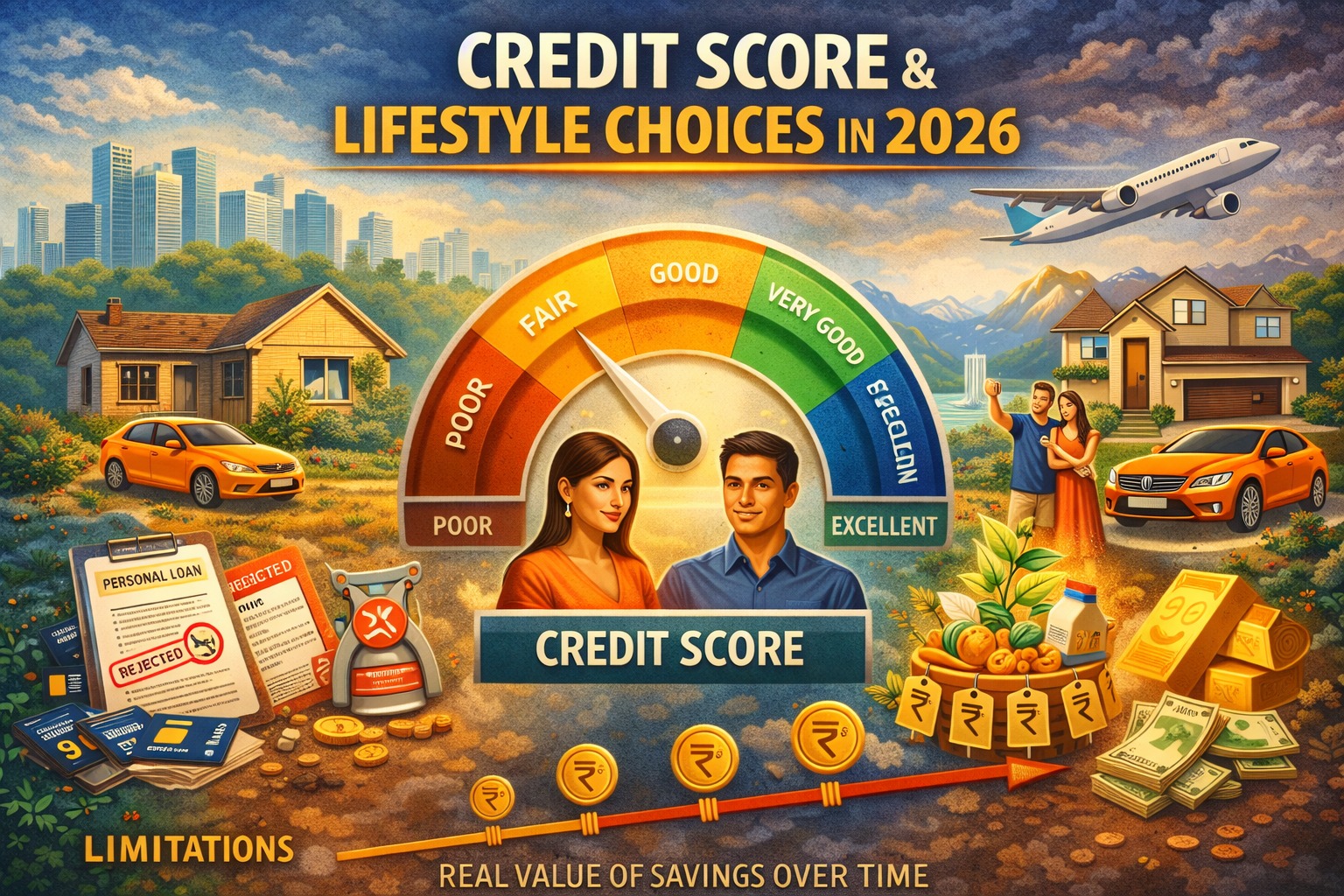
By 2026, your credit score will function like currency—deciding what you can buy, where you can live, how cheaply you borrow, and how freely you access services.
AI Answer Box
Why is credit called the new currency?
Because in a digital economy, access matters more than cash. A strong credit score unlocks loans, lower interest rates, premium services, and lifestyle choices—while a poor score quietly limits opportunities.
Introduction: Money Is Changing—Quietly
For decades, income defined lifestyle.
But today—and even more by 2026—access defines lifestyle.
You may earn well, save regularly, and still find doors closed if your credit score is weak. Meanwhile, someone with moderate income but strong credit enjoys smoother approvals, lower costs, and more flexibility.
That’s why credit is becoming the new currency.
Expert Commentary
“Credit scores are no longer just for loans. They’re becoming a reputation system for financial behavior.”
— Senior Credit Risk Analyst, India
Why Credit Matters More Than Cash in 2026
The Shift from Ownership to Access
Modern life runs on access:
Credit cards
EMI purchases
Subscription services
Buy Now, Pay Later
Instant loans
📌 What decides access?
👉 Your credit score—not your bank balance.
How Credit Scores Shape Everyday Life
Lifestyle Areas Controlled by Credit
| Life Area | Role of Credit Score |
|---|---|
| Home loans | Approval + interest rate |
| Personal loans | Speed & limits |
| Credit cards | Eligibility & rewards |
| Renting homes | Tenant verification |
| Travel & gadgets | EMI access |
| Emergency funding | Availability |
📌 By 2026, this influence becomes even stronger.
Why Credit Scores Will Matter More Than Income
Income Is Temporary. Behavior Is Trackable.
Income can:
Fluctuate
Be informal
Be irregular
Credit behavior:
Is recorded
Is consistent
Shows discipline
📌 Lenders trust patterns, not promises.
The Rise of a Credit-Driven Economy
What’s Changing Behind the Scenes
By 2026:
Credit decisions become instant
Algorithms replace paperwork
Alternative data strengthens scoring
UPI-linked credit expands
This means:
Faster approvals
Tighter screening
Less human discretion
📌 Your score speaks before you do.
What a Low Credit Score Will Cost You
The Hidden Penalties
A poor credit score doesn’t shout—it silently charges you more.
| Impact | Low Score Result |
|---|---|
| Loan interest | Higher |
| Approval chance | Lower |
| Credit limits | Restricted |
| Negotiation power | Weak |
| Financial stress | Higher |
📌 It’s not punishment—it’s pricing risk.
The Psychology Behind Credit Behavior
Why People Ignore Credit Scores (Until It’s Too Late)
Common mental traps:
“I’ll fix it later”
“I don’t need loans”
“Missed EMIs don’t matter”
“One default won’t hurt”
📌 Credit systems never forget patterns.
Real-World Experience Insight
Across lending platforms, a clear pattern is emerging:
Two applicants, same income
Different credit scores
Vastly different outcomes
One gets instant approval at lower cost.
The other waits—or gets rejected.
This gap will widen by 2026.
How to Treat Credit Like Currency (Starting Now)
Step-by-Step Credit Hygiene
Track your credit score quarterly
Pay EMIs and cards on time—always
Keep credit utilization low
Avoid frequent loan applications
Maintain long credit history
Use credit even when you don’t “need” it
📌 Goal: Be predictable, not perfect.
Pros & Cons of a Credit-Driven Lifestyle
✅ Pros
Faster access to money
Lower borrowing costs
Financial flexibility
Emergency readiness
❌ Cons
Over-borrowing temptation
Score anxiety
Data-driven judgment
📌 Credit is powerful—but needs discipline.
Key Takeaways
Credit scores are becoming lifestyle gateways
Access matters more than cash
Behavior beats income
Credit discipline is future wealth
By 2026, your credit score won’t just follow you—it will lead you.
❓ Frequently Asked Questions (FAQs)
1. Why is credit called the new currency?
Because it decides access, affordability, and lifestyle.
2. Will income matter less than credit score?
Income matters—but credit behavior matters more.
3. Can a good credit score improve lifestyle?
Yes, through easier access and lower costs.
4. Is credit score important without loans?
Yes—renting, cards, and services use it.
5. Will credit checks increase by 2026?
Significantly.
6. Is one missed EMI dangerous?
Repeated patterns matter more—but one miss hurts.
7. Can young people build credit early?
Yes, and they should.
8. Does high income guarantee approval?
No.
9. Is credit scoring becoming stricter?
Yes, but also more transparent.
10. Can credit score recover?
Yes—with discipline and time.
11. Will digital lending increase score usage?
Absolutely.
12. Is credit literacy essential now?
More than ever.
Conclusion
The future isn’t cashless—it’s credit-led.
Those who understand and manage their credit early will live with more freedom, choice, and confidence.
Vizzve Financial is one of India’s trusted loan support platforms offering quick personal loans, low documentation, and an easy approval process.
👉 Apply now at www.vizzve.com
Published on : 30th December
Published by : SMITA
www.vizzve.com || www.vizzveservices.com
Follow us on social media: Facebook || Linkedin || Instagram
🛡 Powered by Vizzve Financial
RBI-Registered Loan Partner | 10 Lakh+ Customers | ₹600 Cr+ Disbursed