

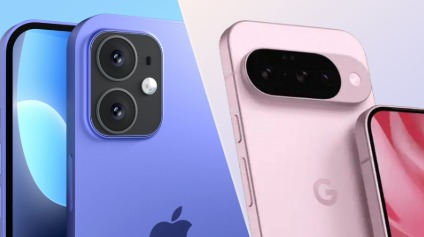
For years, Apple’s iPhone has been considered the gold standard of smartphone security. However, in 2025, that long-standing perception is being challenged. With the launch of the Google Pixel 10 and the rise of advanced Android security features, Apple’s iPhone 17 may no longer hold the top spot for digital safety.
Let’s explore why experts believe that some Android phones — especially the Pixel 10 — are now safer than the iPhone 17.
1. The Update Advantage: 7 Years of Protection
One of the biggest shifts in 2025 is Google’s commitment to seven years of OS and security updates for its Pixel series.
This matches or even exceeds Apple’s traditional software support timeline — but with an added edge: Google is promising faster, real-time updates that reach devices directly, without carrier delays.
In contrast, while iPhone 17 users still enjoy consistent updates, Apple’s closed ecosystem means that patches arrive on a fixed schedule, sometimes slower to react to new, emerging threats.
Verdict:
✅ Pixel 10 offers longer, more agile security coverage than before.
2. AI-Powered Threat Detection
Google’s Pixel 10 has introduced on-device AI threat detection, a feature that constantly scans apps and files for malware or suspicious activity — even those installed outside the Play Store.
This proactive model identifies and isolates threats before they can cause damage.
While iPhones rely heavily on App Store security screening and sandboxing, they lack this continuous AI-based threat monitoring. Once malware bypasses Apple’s approval systems (which has happened before), users have limited control to detect or remove it manually.
Verdict:
✅ Pixel’s real-time AI security gives Android an upper hand in proactive defense.
3. Custom Chip-Level Security: A Tight Race
Both Apple and Google use custom security chips:
Apple’s Secure Enclave safeguards Face ID, payment, and password data.
Google’s Titan M3 chip in the Pixel 10 offers similar encryption protection for personal data, PINs, and credentials.
However, Google’s latest Titan M3 works hand-in-hand with Android’s security modules and AI scanning — ensuring a deeper integration between hardware and software protection.
Verdict:
🤝 Both brands excel — but Google’s AI-driven integration is setting a new benchmark.
4. User Control and Transparency
In 2025, Android’s security settings have become far more transparent and user-friendly.
Pixel users can now:
View detailed app permissions in real-time
Receive live alerts about suspicious data usage
Instantly revoke access from background apps
Apple, while secure, remains more restrictive. The iPhone 17 hides some system-level activity from users in the name of simplicity — which limits manual control for tech-savvy users who want full visibility.
Verdict:
✅ Android gives users more control; iPhone prioritizes privacy through restriction.
5. The “Ecosystem” Factor
Apple still wins when it comes to closed-loop protection. The iPhone 17, iCloud, and macOS ecosystem ensure tight data synchronization and minimal third-party risk.
However, this walled garden also limits flexibility and adaptability against new types of cyber threats — particularly those that evolve faster than Apple’s vetting system.
On the other hand, Google’s open but secure model enables faster response times to emerging threats, especially through the Play Protect and AI systems that evolve daily.
Verdict:
🔒 Apple = strong but rigid
⚙️ Google = dynamic and adaptive
So, Is iPhone 17 Really “Less Safe”?
Not entirely — but “less proactive” might be the better term.
Apple still offers industry-leading encryption, privacy safeguards, and secure app management.
However, in 2025, Google’s Pixel 10 has proven that Android can be equally — if not more — secure by focusing on live protection, AI-based monitoring, and extended update support.
In short:
Apple protects through control.
Google protects through intelligence.
The real winner depends on what kind of user you are:
Prefer simplicity and privacy? Go iPhone.
Want transparency and active threat detection? Go Pixel.
FAQs
Q1: Is the Pixel 10 safer than all Android phones?
Not necessarily. Google’s Pixel line receives the best and fastest security support, but lower-end Android phones may not get the same protection.
Q2: Does Apple still protect user data better?
Yes, Apple remains superior in data encryption and ecosystem privacy — but Google’s AI scanning offers better real-time protection.
Q3: Should iPhone users worry about security in 2025?
No — iPhones are still highly secure. But users should stay updated and avoid assuming that Apple’s system is “unhackable.”
Q4: What’s the best way to stay safe on any phone?
Keep your OS updated, use biometric locks, avoid unknown app sources, and enable two-factor authentication.
Published on : 31st October
Published by : SMITA
www.vizzve.com || www.vizzveservices.com
Follow us on social media: Facebook || Linkedin || Instagram
🛡 Powered by Vizzve Financial
RBI-Registered Loan Partner | 10 Lakh+ Customers | ₹600 Cr+ Disbursed
https://play.google.com/store/apps/details?id=com.vizzve_micro_seva&pcampaignid=web_share