

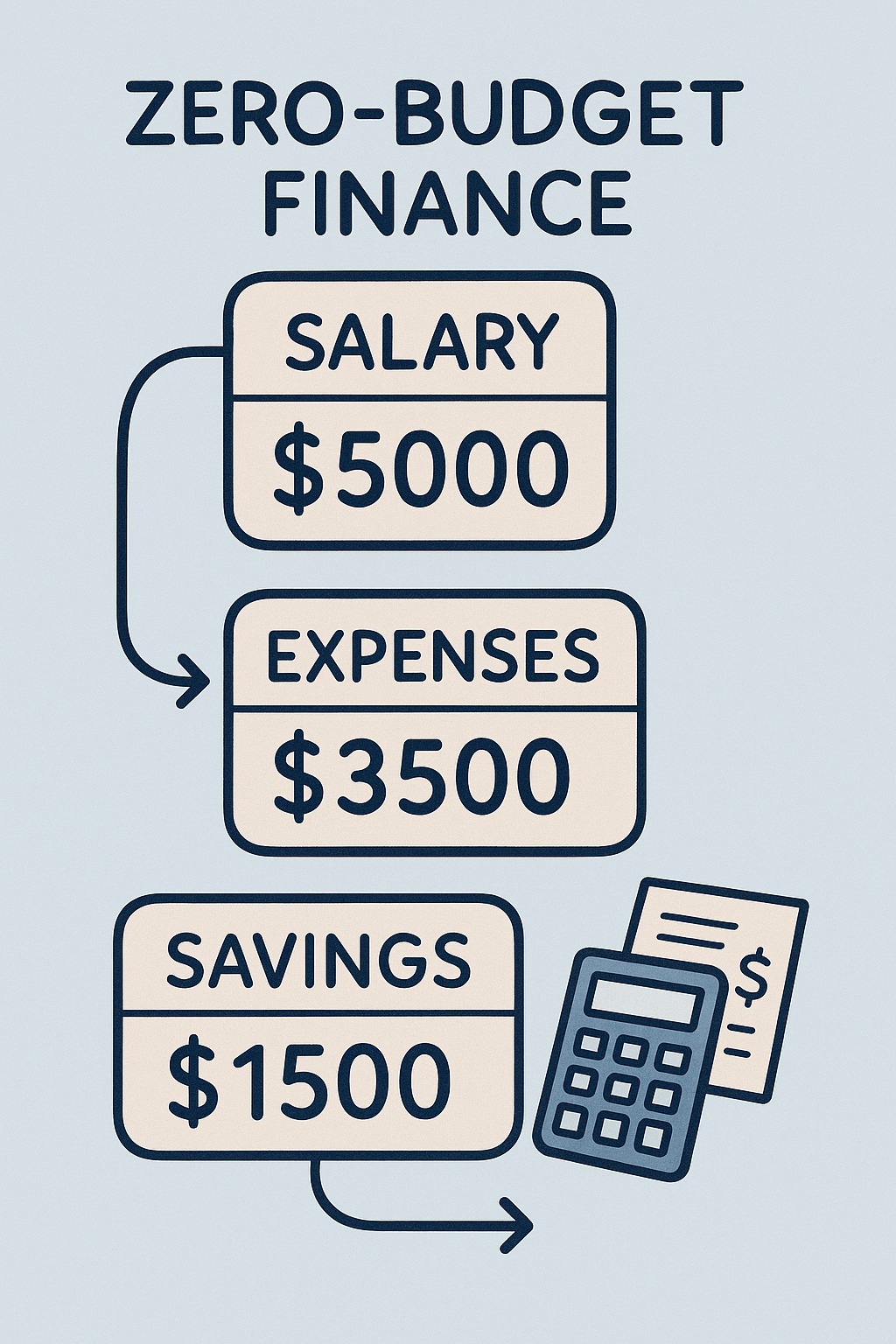
Many salaried people today feel trapped in a cycle where their entire salary vanishes the moment it arrives. Between rent, EMIs, groceries, bills, lifestyle expenses, subscriptions and unplanned costs, it feels like there’s nothing left to save — not even ₹500.
This is where Zero-Budget Finance comes in.
It’s a practical method designed for people whose salary is already over-committed, helping them take control of money without increasing income or cutting life’s basic comforts.
1. Understand the Zero-Budget Finance Approach
Zero-budget finance is not “spending zero.”
It simply means every rupee has a job — you decide where your money goes before it arrives.
Instead of random spending, you categorize your money into:
Essentials
EMIs & dues
Survival expenses
Future commitments
Mini-savings
You take full control without needing a big income.
2. Your First Step: List Your Real Monthly Obligations
Write down everything you pay every month:
Rent
EMIs
Credit card bills
Electricity & WiFi
Groceries
Insurance
Transportation
Subscriptions
Most people realise they are paying for many non-essential things without noticing.
This visibility alone saves money.
3. Apply the “Rearrange, Reduce, Remove” Rule
✔ Rearrange
Move payments to salary date + 3 days so you pay bills when your salary comes in.
This avoids late fees and interest.
✔ Reduce
Ask vendors for:
EMI restructuring
Credit card conversions
Lower data plans
Cheaper insurance premiums
Removing duplicate subscriptions
A reduction of even ₹500–₹1500 per item changes your monthly flow.
✔ Remove
Anything you don’t use for 45 days → eliminate.
This includes:
OTT subscriptions
Food delivery memberships
Gym but you don’t go
App subscriptions
Unused credit cards
4. Create a Zero-Balance Budget: Salary = 100% Allocated
Here’s how:
If salary = ₹40,000, assign all of it to categories like:
₹15,000 → Rent
₹6,000 → EMIs
₹5,000 → Groceries
₹2,000 → Transport
₹1,500 → Subscriptions & utilities
₹1,000 → Emergency fund
₹500 → Personal spending
₹500 → Sinking fund (future expenses)
₹8,500 → Debt repayment + savings strategy
End result:
You spend everything on paper first → no surprises later.
5. Build a “Mini Emergency Fund” Even If You’re Broke
Start with ₹10–20 per day.
Yes, even that counts.
A ₹600–₹900 monthly cushion becomes a lifesaver for:
Medical expenses
Transportation issues
Social commitments
Unexpected bills
This prevents you from taking loans again.
6. Switch to Cash Envelopes for 3 Categories
Use cash for:
Groceries
Personal spending
Eating out
Psychology says:
People spend 30–40% less when using cash instead of UPI/card.
This automatically reduces wasteful spending.
7. Fix Your Debt: The Biggest Salary Killer
If EMIs eat half your salary, follow:
✔ “Snowball Method”
Pay off the smallest EMI first → get mental motivation.
✔ “Avalanche Method”
Clear the highest-interest one first.
✔ Renegotiate EMIs
Banks easily restructure for salaried customers.
8. Increase Income Without Side Hustles
Small internal adjustments can bring extra money:
Claim tax deductions
Use credit card reward points
Redeem bank cashback
Use salary account benefits
Sell unused items
Use employer reimbursements properly
Even an extra ₹1000–₹3000 helps.
9. Review Every 30 Days
Budgeting is not one-time.
Income changes. Expenses change. You evolve.
A monthly 15-minute review keeps you financially stable.
Conclusion
You don’t need a bigger salary to control your money.
You need a better system.
Zero-budget finance helps you:
Break the cycle of paycheck-to-paycheck
Avoid debt traps
Save small but consistently
Stabilize your monthly budget
Reduce financial stress
When every rupee has a purpose, your money finally starts working for you.
FAQs
Q1. Is zero-budget finance only for low-income earners?
No. It’s helpful for anyone whose expenses exceed or match their salary.
Q2. Can I save if my salary is completely committed?
Yes — even ₹10–₹50/day savings build stability.
Q3. Does zero-budgeting help reduce debt?
Yes, because it prioritizes essential EMIs and puts control back in your hands.
Q4. How long before I see results?
Most people see relief in 30–60 days.
Q5. Do I need apps for this method?
A notebook or phone note is enough.
Published on : 14th November
Published by : SMITA
www.vizzve.com || www.vizzveservices.com
Follow us on social media: Facebook || Linkedin || Instagram
🛡 Powered by Vizzve Financial
RBI-Registered Loan Partner | 10 Lakh+ Customers | ₹600 Cr+ Disbursed